Roundup #3

The Economic Crisis in Fact and Fiction by Paul Mattick with John Clegg and Aaron Benanav

What’s going on now is the reappearance of the crisis that should have happened in the mid-1970s.”

1 in 4 Americans Apparently Unaware the Earth Orbits the Sun by Samantha Grossman

And the fact that only 74 percent of participants knew that the Earth revolved around the sun is perhaps less alarming than the fact that only 48 percent knew that humans evolved from earlier species of animals.”

Speech on the Kurdish Struggle at EZLN Capitalist Hydra Seminar by Havin Guneser

“Without understanding how masculinity was socially formed, one cannot analyze the institution of state and therefore will not be accurately be able to define the war and power culture related to statehood… This is what paved the way for femicide and the exploitation and colonization of peoples…”

Capitalism and the Destruction of Life on Earth: Six Theses on Saving the Humans by Richard Smith

At current rates, Harvard biologist E.O Wilson says, “half the world’s great forests have already been leveled, and half the world’s plant and animal species may be gone by the end of this century.” Corporations aren’t necessarily evil – although plenty are diabolically evil – but they can’t help themselves.”

The age of humanism is ending by Achille Mbembe

Neoliberal capitalism has left in its wake a multitude of destroyed subjects, many of whom are deeply convinced that their immediate future will be one of continuous exposure to violence and existential threat…In a world set on objectifying everybody and every living thing in the name of profit, the erasure of the political by capital is the real threat. The transformation of the political into business raises the risk of the elimination of the very possibility of politics.”


Roundup #2

Manifesto Against Labour by the Krisis Group

The more the crisis of labour society is worsening and reformist attempts of ‘repair work’ fail, the more the gap is widening between the isolated and helpless monads as constituted by (capitalist) society and the potential formation of a movement that is ready to re-appropriate the socially constituted species capacities. The rapid degeneration of social relations all over the world proves that the old ideas and sentiments on labour and competition are unshaken, but are readjusted to ever-lower standards. Step-by-step de-civilisation seems to be the “natural” course of the crisis despite widespread discontent and unease.”

Crisis: Tendencias y alternativas by Pablo González Casanova

Con razón muchos autores no sólo hablan de una crisis del capitalismo sino de una crisis de la civilización. Algo de eso es lo que está pasando aquí y en el mundo que domina el complejo empresarial-militar-político y mediático de Estados Unidos y de la Unión Europea, con sus redes de aliados, socios y subordinados de una globalización que se distingue de la política imperialista anterior, por lo menos en dos terrenos: Uno consiste en que más que dominar a los Estados-nación desde un centro rector, las sedes imperiales están organizando una burguesía global, cuyos enlaces consolidados reciben el apoyo necesario para enriquecerse y acumular, siempre que del ingreso nacional total, las corporaciones se queden con la mayor parte”

Until We Win: Black Labor and Liberation in the Disposable Era by Kali Akuno

Autonomous projects are initiatives not supported or organized by the government (state) or some variant of monopoly capital (finance or corporate industrial or mercantile capital). These are initiatives that directly seek to create a democratic “economy of need” around organizing sustainable institutions that satisfy people’s basic needs around principles of social solidarity and participatory or direct democracy that intentionally put the needs of people before the needs of profit…To ensure that these are not mere Black capitalist enterprises, these initiatives must be built democratically from the ground up and must be owned, operated, and controlled by their workers and consumers.”

Building Democracy without the State by Dilar Dirik

It is of course difficult to raise society’s consciousness in a short span of time, especially where war conditions, embargoes, internalized mentalities and ancient despotic structures have been deeply institutionalized and can lead to power abuses and apolitical mindsets. An alternative education system, organized through academies, aims to promote a healthy social mentality, while self-organization practically reproduces a conscious society by mobilizing it in all spheres of life.”

Goodbye, American neoliberalism. A new era is here by Cornel West

The monumental election of Trump was a desperate and xenophobic cry of human hearts for a way out from under the devastation of a disintegrating neoliberal order – a nostalgic return to an imaginary past of greatness.”


Achille Mbembe: The age of humanism is ending

This article was originally published on Dec 22, 2016 in Mail & Guardian.

There is no sign that 2017 will be much different from 2016.

Under Israeli occupation for decades, Gaza will still be the biggest open prison on Earth.

In the United States, the killing of black people at the hands of the police will proceed unabated and hundreds of thousands more will join those already housed in the prison-industrial complex that came on the heels of plantation slavery and Jim Crow laws.

Europe will continue its slow descent into liberal authoritarianism or what cultural theorist Stuart Hall called authoritarian populism. Despite complex agreements reached at international forums, the ecological destruction of the Earth will continue and the war on terror will increasingly morph into a war of extermination between various forms of nihilism.

Inequalities will keep growing worldwide. But far from fuelling a renewed cycle of class struggles, social conflicts will increasingly take the form of racism, ultra nationalism, sexism, ethnic and religious rivalries, xenophobia, homophobia and other deadly passions.

The denigration of virtues such as care, compassion and kindness will go hand in hand with the belief, especially among the poor, that winning is all that matters and who wins — by whatever means necessary — is ultimately right.

With the triumph of this neo-Darwinian approach to history-making, apartheid under various guises will be restored as the new old norm. Its restoration will pave the way to new separatist impulses, the erection of more walls, the militarisation of more borders, deadly forms of policing, more asymmetrical wars, splitting alliances and countless internal divisions including in established democracies.

None of the above is accidental. If anything, it is a symptom of structural shifts, which will become ever more apparent as the new century unfolds. The world as we knew it since the end of World War II, the long years of decolonisation, the Cold War and the defeat of communism has ended.

Another long and deadlier game has started. The main clash of the first half of the 21st century will not oppose religions or civilisations. It will oppose liberal democracy and neoliberal capitalism, the rule of finance and the rule of the people, humanism and nihilism.

Capitalism and liberal democracy triumphed over fascism in 1945 and over communism in the early 1990s when the Soviet Union collapsed.  With the dissolution of the Soviet Union and the advent of globalisation, their fates were disentangled. The widening bifurcation of demo-cracy and capital is the new threat to civilisation.

Abetted by technological and military might, finance capital has achieved its hegemony over the world by annexing the core of human desires and, in the process, by turning itself into the first global secular theology. Fusing the attributes of a technology and a religion, it relied on uncontested dogmas modern forms of capitalism had reluctantly shared with democracy since the post-war period — individual liberty, market competition and the rule of the commodity and of property, the cult of science, technology and reason.

Each of these articles of faith is under threat. At its core, liberal democracy is not compatible with the inner logic of finance capitalism. The clash between these two ideas and principles is likely to be the most signifying event of the first half of a 21st-century political landscape — a landscape shaped less by the rule of reason than by the general release of passions, emotions and affect.

In this new landscape, knowledge will be defined as knowledge for the market. The market itself will be re-imagined as the primary mechanism for the validation of truth.

As markets themselves are increasingly turning into algorithmic structures and technologies, the only useful knowledge will be algorithmic.

Instead of people with body, history and flesh, statistical inferences will be all that count. Statistics and other big data will mostly be derived from computation.

As a result of the conflation of knowledge, technology and markets, contempt will be extended to anyone who has nothing to sell.

The humanistic and Enlightenment notion of the rational subject capable of deliberation and choice will be replaced by the consciously deliberating and choosing consumer.

Already in the making, a new kind of human will triumph.  This will not be the liberal individual who, not so long ago, we believed could be the subject of democracy. The new human being will be constituted through and within digital technologies and computational media.

The computational age — the age of Facebook, Instagram, Twitter — is dominated by the idea that there are clean slates in the unconscious. New media forms have not only lifted the lid previous cultural eras had put on the unconscious. They have become the new infrastructures of the unconscious.

Yesterday, human sociality consisted of keeping tabs on the unconscious. For the social to thrive meant exercising vigilance on ourselves, or delegating to specific authorities the right to enforce such vigilance.

This was called repression.

Repression’s main function was to set the conditions for sublimation. Not all desires could be fulfilled. Not everything could be said or enacted. The capacity to limit oneself was the essence of one’s freedom and the freedom of all.

Partly thanks to new media forms and the post-repressive era it has unleashed, the unconscious can now roam free. Sublimation is no longer necessary.

Language has been dislocated. The content is in the form and the form is beyond, or in excess of, the content.

We are now led to believe that mediation is no longer necessary.

This explains the growing anti-humanist stance that now goes hand in hand with a general contempt for democracy.  Calling this phase of our history fascist might be misleading unless by fascism we mean the normalisation of a social state of warfare.

Such a state would in itself be a paradox because, if anything, warfare leads to the dissolution of the social. And yet under conditions of neoliberal capitalism, politics will become a barely sublimated warfare. This will be a class warfare that denies its very nature — a war against the poor, a race war against minorities, a gender war against women, a religious war against Muslims, a war against the disabled.

Neoliberal capitalism has left in its wake a multitude of destroyed subjects, many of whom are deeply convinced that their immediate future will be one of continuous exposure to violence and existential threat.

They genuinely long for a return to some sense of certainty, the sacred, hierarchy, religion and tradition. They believe that nations have become akin to swamps that need to be drained and the world as it is should be brought to an end. For this to happen, everything should be cleansed off. They are convinced that they can only be saved in a violent struggle to restore their masculinity, the loss of which they attribute to the weaker among them, the weak they do not want to become.

In this context, the most successful political entrepreneurs will be those who convincingly speak to the losers, to the destroyed men and women of globalisation and to their ruined identities.

In the street fight politics will become, reason will not matter. Nor will facts. Politics will revert into brutal survivalism in an ultracompetitive environment.

Under such conditions, the future of progressive and future-oriented mass politics of the left is very uncertain.

In a world set on objectifying everybody and every living thing in the name of profit, the erasure of the political by capital is the real threat. The transformation of the political into business raises the risk of the elimination of the very possibility of politics.

Whether civilisation can give rise at all to any form of political life is the problem of the 21st century.


Achille Mbembe is based at the Wits Institute for Social and Economic Research. His new book, The Politics of Enmity, will be published by Duke University Press in 2017.


Richard Smith: Capitalism and the Destruction of Life on Earth: Six Theses on Saving the Humans

This article was originally published Nov 10, 2013 in Truthout.
richard-smith-article

As global capitalist economic growth accelerates planetary ecological collapse, this article, originally published on November 10, 2013, argues that – impossible as it may seem at present – only the most radical solution – the overthrow of global capitalism, the construction of a mostly publicly-owned and mostly planned eco-socialist economy based on global “contraction and convergence,” on substantial de-industrialization, on sharing, on much less work and much more play and on bottom-up democratic management – is, in fact, the only alternative to the collapse of civilization and ecological suicide.

When, on May 10, 2013, scientists at Mauna Loa Observatory on the big island of Hawaii announced that global CO2 emissions had crossed a threshold at 400 parts per million for the first time in millions of years, a sense of dread spread around the world – not only among climate scientists.

CO2 emissions have been relentlessly climbing since Charles David Keeling first set up his tracking station near the summit of Mauna Loa Observatory in 1958 to monitor average daily global CO2 levels. At that time, CO2 concentrations registered 315ppm. CO2 emissions and atmospheric concentrations have been climbing ever since and, as the records show, temperatures rises will follow. For all the climate summits, the promises of “voluntary restraint,” the carbon trading and carbon taxes, the growth of CO2 emissions and atmospheric concentrations has not just been relentless, it has been accelerating in what scientists have dubbed the “Keeling Curve.”

In the early 1960s, CO2ppm concentrations in the atmosphere grew by 0.7ppm per year. In recent decades, especially as China has industrialized, the growth rate has tripled to 2.1ppm per year. In just the first 17 weeks of 2013, CO2 levels jumped by 2.74ppm compared to last year — “the biggest increase since benchmark monitoring stations high on the Hawaiian volcano of Mauna Loa began taking measurements in 1958.”[1] Carbon concentrations have not been this high since the Pliocene period, between 3 million and 5 million years ago, when global average temperatures were 3 degrees or 4 degrees Centigrade hotter than today, the Arctic was ice-free, sea levels were about 40 meters higher, jungles covered northern Canada and Florida was under water – along with coastal locations we now call New York City, London, Shanghai, Hong Kong, Sydney and many others.

Crossing this threshold has fueled fears that we are fast approaching “tipping points” – melting of the subarctic tundra or thawing and releasing the vast quantities of methane in the Arctic sea bottom – that will accelerate global warming beyond any human capacity to stop it: “I wish it weren’t true, but it looks like the world is going to blow through the 400-ppm level without losing a beat,” said Scripps Institute geochemist Ralph Keeling, whose father, Charles, set up the first monitoring stations in 1958: “At this pace, we’ll hit 450 ppm within a few decades.”

“It feels like the inevitable march toward disaster,” said Maureen E. Raymo, a scientist at the Lamont-Doherty Earth Observatory, a unit of Columbia University.[2]

Why are we marching to disaster, “sleepwalking to extinction” as The Guardian‘s George Monbiot once put it? Why can’t we slam on the brakes before we ride off the cliff to collapse? I’m going to argue here that the problem is rooted in the requirements of capitalist reproduction, that large corporations are destroying life on Earth, that they can’t help themselves, they can’t change or change very much, that so long as we live under this system we have little choice but to go along in this destruction, to keep pouring on the gas instead of slamming on the brakes.

The only alternative – impossible as this may seem right now – is to overthrow this global economic system and all of the governments of the 1% that prop it up and replace them with a global economic democracy, a radical bottom-up political democracy, an ecosocialist civilization. I argue that, although we are fast approaching the precipice of ecological collapse, the means to derail this train wreck are in the making as, around the world, we are witnessing a near-simultaneous global mass democratic “awakening,” as the Brazilians call it, almost a global uprising from Tahir Square to Zuccotti Park, from Athens to Istanbul to Beijing and beyond such as the world has never seen.

To be sure, like Occupy Wall Street, these movements are still inchoate, still mainly protesting what’s wrong rather than fighting for an alternative social order. Like Occupy, they have yet to clearly and robustly answer that crucial question, “Don’t like capitalism? What’s your alternative?” Yet they are working on it, and they are for the most part instinctively and radically democratic. And in this lies our hope. I’m going to make my case in the form of six theses:

1. CAPITALISM IS, OVERWHELMINGLY, THE MAIN DRIVER OF PLANETARY ECOLOGICAL COLLAPSE

From climate change to resource overconsumption to pollution, the engine that has powered three centuries of accelerating economic development revolutionizing technology, science, culture and human life itself is today a roaring, out-of-control locomotive mowing down continents of forests, sweeping oceans of life, clawing out mountains of minerals, drilling, pumping out lakes of fuels, devouring the planet’s last accessible resources to turn them all into “product” while destroying fragile global ecologies built up over eons.

Between 1950 and 2000 the global human population more than doubled from 2.5 billion to 6 billion. But in these same decades, consumption of major natural resources soared more than sixfold on average, some much more. Natural gas consumption grew nearly twelvefold, bauxite (aluminum ore) fifteenfold. And so on.[3]

At current rates, Harvard biologist E.O Wilson says, “half the world’s great forests have already been leveled, and half the world’s plant and animal species may be gone by the end of this century.” Corporations aren’t necessarily evil – although plenty are diabolically evil – but they can’t help themselves. They’re just doing what they’re supposed to do for the benefit of their shareholders. Shell Oil can’t help but loot Nigeria and the Arctic and cook the climate. That’s what shareholders demand.[4] BHP Billiton, Rio Tinto and other mining giants can’t resist mining Australia’s abundant coal and exporting it to China and India. Mining accounts for 19 percent of Australia’s gross domestic product and substantial employment even as coal combustion is the worst driver of global warming. IKEA can’t help but level the forests of Siberia and Malaysia to feed the Chinese mills building its flimsy, disposable furniture (IKEA is the third-largest consumer of lumber in the world). Apple can’t help it if the cost of extracting the “rare earths” it needs to make millions of new iThings each year is the destruction of the eastern Congo – violence, rape, slavery, forced induction of child soldiers, along with poisoning local waterways. [5] Monsanto and DuPont and Syngenta and Bayer Crop Science have no choice but to wipe out bees, butterflies, birds and small farmers and extinguish crop diversity to secure their grip on the world’s food supply while drenching the planet with their Roundups and Atrazines and neonicotinoids. [6] This is how giant corporations are wiping out life on Earth in the course of a routine business day. And the bigger the corporations grow, the worse the problems become.

In Adam Smith’s day, when the first factories and mills produced hat pins and iron tools and rolls of cloth by the thousands, capitalist freedom to make whatever they wanted didn’t much matter because they didn’t have much impact on the global environment. But now everything is produced in the millions and billions – then trashed today and reproduced all over again tomorrow. When the planet is looted and polluted to support all this frantic and senseless growth, it matters – a lot.

The world’s climate scientists tell us we’re facing a planetary emergency. They’ve been telling us since the 1990s that if we don’t cut global fossil-fuel greenhouse-gas emissions by 80 percent to 90 percent below 1990 levels by 2050 we will cross critical tipping points and global warming will accelerate beyond any human power to contain it. Yet despite all the ringing alarm bells, no corporation and no government can oppose growth. Instead, every capitalist government in the world is putting pedal to the metal to accelerate growth, to drive us full throttle off the cliff to collapse. Marxists have never had a better argument against capitalism than this inescapable and apocalyptic “contradiction.”

2. SOLUTIONS TO THE ECOLOGICAL CRISIS ARE BLINDINGLY OBVIOUS, BUT WE CAN’T TAKE THE NECESSARY STEPS TO PREVENT ECOLOGICAL COLLAPSE BECAUSE, SO LONG AS WE LIVE UNDER CAPITALISM, ECONOMIC GROWTH HAS TO TAKE PRIORITY OVER ECOLOGICAL CONCERNS OR THE ECONOMY WILL COLLAPSE AND MASS UNEMPLOYMENT WILL BE THE RESULT

We all know what we have to do: suppress greenhouse gas emissions. Stop overconsuming natural resources. Stop the senseless pollution of the Earth, its waters and its atmosphere with toxic chemicals. Stop producing waste that can’t be recycled by nature. Stop the destruction of biological diversity and ensure the rights of other species to flourish. We don’t need any new technological breakthroughs to solve these problems. Mostly, we just stop doing what we’re doing. But we can’t stop because we’re all locked into an economic system in which companies have to grow to compete and reward their shareholders and because we all need the jobs.

Take Climate Change … 

James Hansen, the world’s pre-eminent climate scientist, has argued that to save the humans, “Coal emissions must be phased out as rapidly as possible, or global climate disasters will be a dead certainty. … Yes, [coal, oil, gas] most of the fossil fuels must be left in the ground. That is the explicit message that the science provides.”

Humanity treads today on a slippery slope. As we continue to pump greenhouse gases in the air, we move onto a steeper, even more slippery incline. We seem oblivious to the danger – unaware of how close we may be to a situation in which a catastrophic slip becomes practically unavoidable, a slip where we suddenly lose all control and are pulled into a torrential stream that hurls us over a precipice to our demise. [7]

But how can we do this under capitalism? After his climate negotiators stonewalled calls for binding limits on CO2 emissions at Copenhagen, Cancun, Cape Town and Doha, President Obama is now trying to salvage his environmental “legacy” by ordering his EPA to impose “tough” new emissions limits on existing power plants, especially coal-fired plants.[8] But this won’t salvage his legacy or, more importantly, his daughters’ future. How much difference would it make, really, if every coal-fired power plant in the United States were to shut down tomorrow when US coal producers are free to export their coal to China, which they are doing, and when China is building another coal-fired power plant every week? The atmosphere doesn’t care where the coal is burned. It only cares how much is burned. Yet how could Obama tell American mining companies to stop mining coal? This would be tantamount to socialism. But if we do not stop mining and burning coal, capitalist freedom and private property is the least we’ll have to worry about.

Same with Obama’s “tough” new fuel-economy standards. In August 2012, Obama boasted that his new corporate average fuel economy (CAFE) standards would “double fuel efficiency” in the next 13 years to 54.5 mpg by 2025, up from 28.6 mpg at present – cutting vehicle CO2 emissions in half, so helping enormously to “save the planet.” But as the Center for Biological Diversity and other critics have noted, Obama was lying as usual. First, his so-called “tough” new CAFE standards were so full of loopholes, negotiated with Detroit, that they actually encourage more gas guzzling, not less.[9] That’s because the standards are based on a sliding scale according to “vehicle footprints” – the bigger the car, the less mileage it has to get to meet its standard. So, in fact, Obama’s “tough” standards are (surprise) custom-designed to promote what Detroit does best – produce giant Sequoias, mountainous Denalis, Sierras, Yukons, Tundras and Ticonderogas, Ram Chargers and Ford F series luxury trucks, grossly obese Cadillac Escalades, soccer kid hauler Suburbans, even 8,000-pound Ford Excursions and let these gross gas hogs meet the “fleet standard.” Many of these ridiculously oversized and overaccessorized behemoths are more than twice the weight of cars and pickup trucks in the 1950s.[10] These cars and “light” trucks are among the biggest-selling vehicles in America today (GM’s Sierra is No. 1), and they get worse gas mileage than American cars and trucks half a century ago. Cadillac’s current Escalade gets worse mileage than its chrome-bedecked tailfin-festooned land yachts of the mid-1950s![11] Little wonder Detroit applauded Obama’s new CAFE standards instead of damning them. Secondly, what would it matter even if Obama’s new CAFE standards actually did double fleet mileage – when American and global vehicle fleets are growing exponentially? In 1950 Americans had one car for every three people. Today we have 1.2 cars for every American. In 1950 when there were about 2.6 billion humans on the planet, there were 53 million cars on the world’s roads – about one for every 50 persons. Today, there are 7 billion people but more than 1 billion cars. And industry forecasters expect there will be 2 billion to 2.5 billion cars on the world’s roads by midcentury. China is expected to have 1 billion.[12] So, at the end of the day, incremental half-measures like CAFE standards can’t stop rising GHG missions. Barring some technical miracle, the only way to cut vehicle emissions is to just stop making them – drastically suppress vehicle production, especially of the worst gas hogs. In theory, Obama could at least simply order GM to stop building its humongous gas guzzlers and switch to producing small economy cars. After all, the federal government owns the company! But of course, how could he do any such thing? Detroit lives by the mantra “big car big profit, small car small profit.” Since Detroit has never been able to compete against the Japanese and Germans in the small-car market, which already is glutted and nearly profitless everywhere, such an order would only doom GM to failure, if not bankruptcy (again), throw masses of workers onto the unemployment lines (and devalue the GM stock in the feds’ portfolio). So given capitalism, Obama is, in fact, powerless. He’s locked in to promoting the endless growth of vehicle production, even of the worst polluters – and lying about it all to the public to try to patch up his pathetic “legacy.” And yet, if we don’t suppress vehicle production, how can we stop rising CO2 emissions?

In the wake of the failure of climate negotiators from Kyoto to Doha to agree on binding limits on GHG emissions, exasperated British climate scientists Kevin Anderson and Alice Bows at the Tyndall Centre, Britain’s leading climate change research center, wrote in September 2012 that we need an entirely “new paradigm”: government policies must “radically change” if “dangerous” climate change is to be avoided:

We urgently need to acknowledge that the development needs of many countries leave the rich western nations with little choice but to immediately and severely curb their greenhouse gas emissions. … [The] misguided belief that commitments to avoid warming of 2 degrees C can still be realized with incremental adjustments to economic incentives. A carbon tax here, a little emissions trading there and the odd voluntary agreement thrown in for good measure will not be sufficient. … Long-term end-point targets (for example, 80% by 2050) have no scientific basis. What governs future global temperatures and other adverse climate impacts are the emissions from yesterday, today, and those released in the next few years.[13]

And not just scientists. In its latest world energy forecast released on November 12, 2012, the International Energy Agency (IEA) warns that despite the bonanza of fossil fuels now made possible by fracking, horizontal and deepwater drilling, we can’t consume them if we want to save the humans: “The climate goal of limiting global warming to 2 degrees Centigrade is becoming more difficult and costly with each year that passes. … No more that one-third of proven reserves of fossil fuels can be consumed prior to 2050 if the world is to achieve the 2 degree C goal. … ” [14] Of course the science could be wrong about this. But so far climate scientists have consistently underestimated the speed and ferocity of global warming, and even prominent climate change deniers have folded their cards.[15]

Emergency Contraction or Global Ecological Collapse

Still, it’s one thing for James Hansen or Bill McKibben of 350.org to say we need to “leave the coal in the hole, the oil in the soil, the gas under the grass,” to call for “severe curbs” in GHG emissions – in the abstract. But think about what this means in our capitalist economy. Most of us, even passionate environmental activists, don’t really want to face up to the economic implications of the science we defend. That’s why, if you listen to environmentalists such as Bill McKibben or Al Gore, for example, you will get the impression that global warming is mainly driven by fossil-fuel-powered electric power plants, so if we just “switch to renewables” this will solve the main problem and we can carry on with life more or less as we do now. Indeed, “green capitalism” enthusiasts like Thomas Friedman and the union-backed “green jobs” lobby look to renewable energy, electric cars and such as “the next great engine of industrial growth” – the perfect win-win solution. This is a not a solution. This is a delusion, because greenhouse gasses are produced across the economy, not just by or even mainly by power plants. Globally, fossil-fuel-powered electricity generation accounts for 17 percent of GHG emissions, heating accounts for 5 percent, miscellaneous “other” fuel combustion 8.6 percent, industry 14.7 percent, industrial processes another 4.3 percent, transportation 14.3 percent, agriculture 13.6 percent, land-use changes (mainly deforestation) 12.2 percent.[16] This means, for a start, that even if we immediately replaced every fossil-fuel-powered electricity-generating plant on the planet with 100 percent renewable solar, wind and water power, this would reduce global GHG emissions only by around 17 percent. What this means is that, far from launching a new green-energy-powered “industrial growth” boom, barring some tech-fix miracle, the only way to impose “immediate and severe curbs” on fossil fuel production and consumption would be to impose an emergency contraction in the industrialized countries: drastically retrench and in some cases shut down industries, even entire sectors, across the economy and around the planet – not just fossil-fuel producers, but all the industries that consume them and produce GHG emissions – autos, trucking, aircraft, airlines, shipping and cruise lines, construction, chemicals, plastics, synthetic fabrics, cosmetics, synthetic fiber and fabrics, synthetic fertilizer and agribusiness CAFO operations, and many more. Of course, no one wants to hear this because, given capitalism, this would unavoidably mean mass bankruptcies, global economic collapse, depression and mass unemployment around the world. That’s why in April 2013, in laying the political groundwork for his approval of the XL pipeline in some form, President Obama said “The politics of this are tough.” The Earth’s temperature probably isn’t the “number one concern” for workers who haven’t seen a raise in a decade, have an underwater mortgage, are spending $40 to fill their gas tank, can’t afford a hybrid car and face other challenges.”[17] Obama wants to save the planet. But given capitalism, his “number one concern” has to be growing the economy, growing jobs. Given capitalism, today, tomorrow, next year and every year, economic growth will always be the overriding priority – until we barrel right off the cliff to collapse.

The Necessity of Denial and Delusion

There’s no technical solution to this problem and no market solution either. In a very few cases – electricity generation is the main one – a broad shift to renewables could indeed sharply reduce fossil-fuel emissions in that sector. But if we just use “clean” “green” energy to power more growth, consume ever more natural resources to produce more and more junk we don’t need, then we would solve nothing and still would be headed to collapse. Agriculture is another sector in which reliance on fossil fuels could be sharply reduced – by abandoning synthetic fertilizers and pesticides and switching to organic farming. And there’s no downside there – just the resistance of the agribusiness industrial complex. But for the rest of the economy – mining, manufacturing, transportation, chemicals, most services (including construction, tourism, advertising, etc.), there are no such easy substitutes. Take transportation. There are no solar-powered ships or airplanes or trains on anyone’s drawing boards. Producing millions of electric cars instead of millions of gasoline-powered cars, as I explained elsewhere, would be just as ecologically destructive and polluting, if in somewhat different ways, even if they were all run on solar power.[18] Substituting biofuels for fossil fuels in transportation just creates different but no less environmentally destructive problems: Converting farmland to raise biofuel feedstock pits food production against fuels. Converting rainforests, peatlands, savannas or grasslands to produce biofuels releases more CO2 into the atmosphere than the fossil fuels they replace and accelerates species extinction.[19] More industrial farming means more demand for water, synthetic fertilizers and pesticides. And so on. Cap-and-trade schemes can’t cut fossil fuel emissions because, as I explained elsewhere,[20] business understands, even if some environmentalists do not, that “dematerialization” is a fantasy, that there’s no win-win tech solution, that capping emissions means cutting growth. Since cutting growth is unacceptable to business, labor and governments, cap-and-trade has been abandoned everywhere.[21] Carbon taxes can’t stop global warming either because they do not cap emissions. That’s why fossil fuel execs like Rex Tillerson, CEO of ExxonMobil (the largest private oil company in the world) and Paul Anderson, CEO of Duke Energy (the largest electric utility in the United States), support carbon taxes. They understand that carbon taxes would add something to the cost of doing business, like other taxes, but they pose no limit, no “cap” on growth.[22] Exxon predicts that, carbon tax or no carbon tax, by 2040 global demand for energy is going to grow by 35 percent to 65 percent in the developing world and nearly all of this is going to be supplied by fossil fuels. ExxonMobil is not looking to “leave the oil in the soil” as a favor to Bill McKibben and the humans. ExxonMobil is looking to pump it and burn it all as fast as possible to enrich its shareholders. [23]

James Hansen, Bill McKibben, Barack Obama and most of us, really, don’t want to face up to the economic implications of the need to put the brakes on growth and fossil-fuel-based overconsumption. We all “need” to live in denial and believe in delusions that carbon taxes or some tech fix will save us because we all know that capitalism has to grow or we’ll all be out of work. And the thought of replacing capitalism seems so impossible, especially given the powers arrayed against change. But what’s the alternative? In the not-so-distant future, this is all going to come to a screeching halt one way or another – either we seize hold of this out-of-control locomotive and wrench down this overproduction of fossil fuels, or we ride this train right off the cliff to collapse.

Same with Resource Depletion

We in the industrialized “consumer economies” are not just overconsuming fossil fuels. We’re overconsuming everything. From fish to forests, minerals to metals, oil to fresh water, we’re consuming the planet like there’s no tomorrow.[24] Ecological “footprint” scientists tell us that we in the industrialized nations are now consuming resources and sinks at the rate of 1.5 planets per year. That is, we’re using natural resources like fish, forests, water, farmland and so on at half-again the rate that nature can replenish them.[25] According to the World Bank, the wealthiest 10 percent of the world’s people accounts for almost 60 percent of consumption expenditures and the top 20 percent accounts for more than 76 percent of global consumption, whereas the bottom 40 percent of the world’s population account for just 5 percent. Even the bottom 70 percent of the world’s population accounts for barely 15.3 percent of global consumption expenditures.[26] Needless to say, the 70 percent wants and deserves a higher material standard of living. Yet if the whole world were to achieve this by consuming like Americans, we would need something like five more planets of natural resources and sinks for all of that.[27] Think what this means.

Take the case of China. Columbia University’s Earth Policy Institute predicts that if China keeps growing by around 8 percent per year, it’s current rate, Chinese average per capita consumption will reach current US level by around 2035. But to provide the natural resources for China’s 1.3 billion-plus to consume like America’s 330 million, the Chinese, roughly 20 percent of the world’s population, will consume as much oil as the entire world consumes today. They also will consume 69 percent of current world grain production, 62 percent of the current world meat production, 63 percent of current world coal consumption, 35 percent of current world steel consumption, 84 percent of current world paper consumption. (See Table 1.) Well, where on earth are the Chinese going to find the resources (not to mention sinks) to support all this consumption? China certainly doesn’t have the resources. That’s why the Chinese are buying up the planet. And that’s just China. What about the other four-fifths of humanity? What are they going to consume in 2035?

2013.11.10.Table1

Already, as resource analyst Michael Klare reviews in his latest book, The Race for What’s Left, around the world existing reserves of oil, minerals and other resources “are being depleted at a terrifying pace and will be largely exhausted in the not-too-distant future.” This is driving miners and drillers to the ends of the earth, the bottom of oceans, to the arctic. We’re running out of planet to plunder so fast that serious people like Google’s Larry Page and Eric Schmidt have partnered with film director James Cameron to make life imitate art, to explore the possibility of mining asteroids and near planets. Avatar – the perfect capitalist solution to resource exhaustion (but the Marines will be Chinese). [28]

China’s Capitalist Environmental Nightmare

As Beijing has been choking on smog this year, Deutsche Bank analysts gloomily conclude that, barring extreme reforms, Chinese coal consumption and increased car ownership will push pollution levels 70 percent higher by 2025. They say that even if China’s economy slowed to 5 percent growth per year, its annual coal consumption still would rise to 6 billion tons by 2022, from the current 3.8 billion tons. Car ownership is expected to increase over the years to 400 million in 2030 from the current 90 million. For China to meet its goal of reducing PM2.5 particulate matter to 35 micrograms of per cubic meter by 2030, the government would have to take drastic steps – shut down large numbers of coal-fired power plants, sharply reduce the number of vehicles on the roads, and shut down many other polluting industries.

2013 1110-3a

Even then, air pollution would still be above the level deemed safe by the World Health Organization (25 micrograms of PM2.5 particulates per cubic meter). The current national average is 75 micrograms per cubic meter. In January, PM2.5 levels in Beijing reached 900 micrograms per cubic meter.[29] But here again, the problem is that ever since China turned onto the “capitalist road” and made its economy and employment ever-more dependent upon market success like the Western capitalist economies Deng Xiaoping sought to emulate, it can no more subordinate growth to the environment than can Barack Obama or ExxonMobil. Instead, China’s commie capitalists, like regular capitalists everywhere, have no choice but to put the pedal to the metal, do all they can to accelerate humanity’s collective drive to suicide.[30]

“Wild facts” and Unquestioned Assumptions

In mainstream discourse it is taken as an absolutely unquestioned given by scientists like James Hansen, environmentalists like George Monbiot, not to mention CEOs and presidents, that demand for everything must grow infinitely, that economies must grow forever. That’s why Hansen, Monbiot, James Lovelock and others tell us that, Fukishima notwithstanding, we “have to” go nuclear for energy production. In their view, the human population is headed for 9 billion to 10 billion. All these billions want to consume like Americans, so we will need more power for their washing machines, air conditioners, iPads, TVs and (electric) SUVs. We can’t burn more fossil fuels to produce this power because it will cook the planet. Renewables are great but can’t reliably meet relentlessly growing “base load” demand for electricity 24/7. Therefore, they tell us, we have no choice but to turn to nuclear power. (Besides, what could go wrong with the “newest,” “safest,” “fourth generation” reactors? What indeed?)[31]

But not one of these people stops to ask the obvious question: Where are all the resources going to come from to support insatiable consumption on a global scale? In the capitalist lexicon, there is no concept of “too much.” The word overconsumption cannot be found in Econ. 101 text books except as a temporary market aberration, soon to be erased as “perfect competition” matches supply to demand and shortages and surpluses vanish down the gullet of the consumer. The fact that we live on one small planet with finite resources and sinks is just beyond the capitalist imagination because, as Herman Daly used to say, the “wild facts” of environmental reality demolish their underlying premise of the viability of endless growth on a finite planet. So inconvenient facts must be denied, suppressed or ignored. And they are. When, on May 10,2013, climate scientists announced the latest “wild fact” that the level of heat-trapping CO2 concentrations in the atmosphere had passed the long-feared milestone of 400 ppm, an event fraught with ominous consequences for us all, this was met with total silence from the world’s economic and political elites. President Obama was busy preparing his own announcement – that he was clearing the way for accelerated natural-gas exports by approving a huge new $10 billion Freeport LNG facility in Texas. Obama’s Department of Energy gave Freeport LNG the green light because it “found the prospective benefits from exporting energy outweighed concerns about possible downsides.” No surprise there. Freeport LNG chief Michael Smith wasn’t anticipating downsides or any change in Obama’s priorities. He said: “I hope this means that more facilities will get approval in due time, sooner than later. The country needs these exports for jobs, for trade and for geopolitical reasons. … “[32] That’s why, even though, at some repressed level, most Americans understand that fracking the planet is disastrous, even suicidal for their own children in the long run, yet still for the present they have to make the mortgage payments and fill the gas tank. So they have little choice but to live in denial and support fracking.[33] And so we go, down the slippery slope.

No one stops to ask “what’s it all for?” Why do we “need” all this energy? Why do we “need” all the stuff we produce with all this energy? It’s high time we start asking this question. Economists tell us that two-thirds of America’s own economy is geared to producing “consumer” goods and services. To be sure, we need food, clothing, housing, transportation, and energy to run all this. But as Vance Packard astutely observed half a century ago, most of what corporations produce today is produced not for the needs of people but for the needs of corporations to sell to people. From the ever-more obscene and pointless vanities of ruling class consumption – the Bentleys and Maseratis, the Bergdorf Goodman designer collections, the penthouses and resorts and estates and yachts and jets, to the endless waste stream of designed-in obsolescence-driven mass market fashions, cosmetics, furniture, cars, “consumer electronics,” the obese 1000 calorie Big Macs with fries, the obese and overaccesorized SUVs and “light trucks,” the obese and ever-growing McMansions for ever-smaller middle class families, the whole-house central air conditioning, flat screen TVs in every room, iThings in every hand, H&M disposable “fast fashion” too cheap to bother to clean, [34] the frivolous and astonishingly polluting jet and cruise ship vacations everywhere (even Nation magazine cruises with Naomi Klein!), and all the retail malls, office complexes, the packaging, shipping industries, the junk mail/magazine/catalog sales companies, the advertising, banking and credit card “industries” that keep this perpetual consumption machine humming along, not to mention the appalling waste of the arms industry, which is just total deliberate waste and destruction, the vast majority – I would guess at least three quarters of all the goods and services we produce today just do not need to be produced at all. It’s all just a resource-hogging, polluting waste. My parents lived passably comfortable working class lives in the 1940s and 50s without half this stuff and they weren’t living in caves. We could all live happier, better, more meaningful lives without all this junk — and we do not need ever-more energy, solar or otherwise, to produce it. We could shut down all the coal-powered electric generators around the world, most of which, especially in China, are currently dedicated to powering the production of superfluous and disposable junk we don’t need and replace them with — nothing. How’s that for a sustainable solution? Same with nuclear. Since the 1960s, Japan built 54 nuclear power plants. But these were built not so much to provide electricity for the Japanese (their population is falling) as to power Japan’s mighty manufacturing export engine producing all those disposable TVs and Gameboys and Toyotas and Hondas the world does not need and can no longer afford to consume.

Endless growth or repair, rebuild, upgrade, recycle?

So, for example, at the risk of sounding ridiculous, we don’t really need a global automobile industry. At least we don’t need an industry cranking out hundreds of millions of new cars every year, because the industry is built on the principle of designed-in obsolescence, on insatiable repetitive consumption, on advertising and “cash for clunkers” programs to push you to crush your perfectly good present car for a “new,” “improved,” “bigger,” “more luxurious” model that is, in reality, trivially different, sometimes even inferior to the one you just junked. What we need is a different approach to transportation. To build a sustainable transportation system, we would have to divert most resources from auto production to public transportation, trains, buses and bicycling. But, of course, bikes and public transport aren’t feasible everywhere and for every task, particularly for those who live in the suburbs or the country or in the mostly rural developing world. So we would still need some cars and trucks – but many fewer if we “degrow” the economy to produce just what we need instead of for profit. As the VW ads below point out, properly designed and engineered cars can be sturdy but simple, economical to drive, easily serviceable and repairable (even DIY), perpetually rebuildable and upgradable as needed. I’m not suggesting an ecosocialist society should produce this particular “peoples’ car.” We need something with modern safety features. But to the extent that we would need cars in a sustainable society, we could save immense resources and GHG emissions by producing massively fewer cars and keep them running for decades, if not practically forever. Reducing global car production to something like, say 10 percent of current production – and sharing those – would not only save vast resources and eliminate massive pollution but also free up labor and resources for other uses. Let us shorten the working day – and take longer vacations.

The same goes for all kinds of industries.

Apple easily could build you iPhones and iMacs, in classic timeless designs that could last for decades, that could be upgraded easily. This would save mountains of resources, not to mention the lives of Congolese kids and Foxconn assembly workers. But how much profit is there in that? Apple could never justify such a humane and environmentally rational approach to its shareholders because shareholders (who are several stages removed from the “sourcing” process and don’t really care to know about it) are capitalists rationally looking to maximize returns on their portfolios, not to maximize the lifespan of the company’s products, let alone the lifespan of Congolese or Chinese. So to this end, you have to be convinced that your G4 phone is not good enough, that you “need” an iPhone5 because you need a phone that streams movies, that talks to you and more, and next year you will need an iPhone6. And even if you own an iPad3 you will soon “need” an iPad4, plus an iPad Mini, and how will you live without iTV? This incessant, exponentially growing demand for the latest model of disposable electronic gadgets is destroying societies and the environment from Congo to China and beyond.

Miners near village of Kobu in northeastern Congo. Picture credit: Finbarr O’Reilly/Reuters, in The New York Times, March 20, 2012.

IKEA easily could manufacture beautifully designed, high-quality, sturdy and durable furniture that could last a lifetime, that could be handed down to your children or passed on friends or antique shops for others. That would save a Siberia’s worth of trees, lakes of toxic dyes and finishes, and vast quantities of other resources. But why would it do that? IKEA is not in business to make furniture or save the planet. IKEA is in the business to make money. As Ingvar Kamprad, founder and CEO of IKEA (and Nazi symp), long ago discovered, the way to maximize profits (besides employing semi-slave forced prison labor in Stalinist regimes and moving his “Swedish” company from high-tax Sweden to low-tax Holland and Switzerland)[35] is to relentlessly cheapen production by, among other tactics, building flat-pack disposable particle-board furniture in accordance with the Iron Law of Marketing to sell “the cheapest construction for the briefest interval the buying public will tolerate” so IKEA can chop down more Siberian birch trees and sell you the same shoddy $59 bookcase all over again that will last you as long as the first one did – perhaps a bit longer this time if you don’t actually load many books of those flimsy shelves. As an IKEA commercial, directed by Spike Jonze, tells us: “an old lamp (or bookcase or table) doesn’t have any feelings; any piece of furniture can and should be replaced at any time.” The ad, and the whole IKEA approach, suggests that objects have no lasting meaning or value. They’re disposable; when we tire of them, we should just throw them out.[36] This is how IKEA got to be the third-largest consumer of wood in the world, most of it from East Europe and the Russian Siberia, where, according to the World Bank, half of all logging is illegal even by the Russian kleptocracy’s standards of legality. IKEA’s wholly owned Swedish subsidiary Swedwood has even been condemned by Russian nature conservancy organizations and the Global Forest Coalition for clear-cutting 1,400 acres a year of 200- to 600-year-old forest near the Finnish border, a process that “is having deep ramifications on invaluable forest ecosystems.”[37] This is how IKEA’s business plan based on endless “repetitive consumption” is wiping out life on Earth. Here again, the capitalist freedom to make such junk wouldn’t matter – if it weren’t costing the Earth.[38]

Given capitalism, there’s no way to “incentivize” GM to stop producing new cars every year, IKEA to stop making its disposable furniture, Apple to stop pushing you to lose your iPhone 4 and buy a 5. That’s what they’re invested in. Companies can’t change, or change much, because it’s too costly, too risky, shareholders won’t allow it. And given capitalism, most workers, most of the time, have no choice but to support all this suicidal overconsumption because if we all stop shopping to save the planet today, we’d all be out of work tomorrow. Ask your nearest 6-year-old what’s wrong with this picture.

Capitalism and Délastage in the Richest Country of Poor People in the World

Yet even as corporations are plundering the planet to overproduce stuff we don’t need, huge social, economic and ecological needs – housing, schools, infrastructure, health care, environmental remediation – go unmet, even in the industrialized world, while most of Third World lacks even basic sanitation, clean water, schools, health care, ecological restoration, not to mention jobs.[39] After 300 years of capitalist “development” the gap between rich and poor has never been wider: Today, almost half the world, more than 3 billion people, live on less than $2.50 a day, 80 percent of humanity lives on less than $10 a day. This while the world’s richest 1% own 40 percent of the world’s wealth. The richest 10 percent own 85 percent of total global assets, and half the world barely owns 1 percent of global wealth. And these gaps have only widened over time.[40] Tell me again where Karl Marx was wrong? In Congo is one of the lushest, most fertile countries on the planet, with untold natural wealth in minerals, lumber, tropical crops and more. Yet its resources are plundered every day to support gross overconsumption in the north while poverty, hunger and malnutrition are so widespread that Congo is now listed dead last on the 2011 Global Hunger Index, a measure of malnutrition and child nutrition compiled by the International Food Policy Research Institute. While European and American corporations loot its copper and cobalt and coltran for iPhones and such, half the population eats only once a day and a quarter less than that. Things have reached such a state that in places like the capital Kinshasha parents can afford to feed their children only every other day. Congolese call it “délastage” – an ironic takeoff on the rolling electrical blackouts that routinely hit first one neighborhood then the next. In this context it means “Today we eat! Tomorrow we don’t.”

“On some days,” one citoyen told a New York Times reporter, “some children eat, others do not. On other days, all the children eat, and the adults do not. Or vice versa.” [41] This, in the 21st century, in one of the resource-richest countries on Earth, and brought to them by an economic system that capitalist economists never tire of telling us is “the best system humanity can come up with.”

Contraction or Collapse

If there’s no market mechanism to stop plundering the planet, then, again, what alternative is there but to impose an emergency contraction on resource consumption? This doesn’t mean we would have to de-industrialize and go back to riding horses and living in log cabins. But it does mean that we would have to abandon the “consumer economy” – shut down all kinds of unnecessary, wasteful and polluting industries from junk food to cruise ships, disposable Pampers to disposable H&M clothes, disposable IKEA furniture, endless new model cars, phones, electronic games, the lot. Plus all the banking, advertising, junk mail, most retail, etc. We would have completely redesign production to replace “fast junk food” with healthy, nutritious, fresh “slow food,” replace “fast fashion” with “slow fashion,” bring back mending, alterations and local tailors and shoe repairmen. We would have to completely redesign production of appliances, electronics, housewares, furniture and so on to be as durable and long-lived as possible. Bring back appliance repairmen and such. We would have to abolish the throwaway disposables industries, the packaging and plastic bag industrial complex, bring back refillable bottles and the like. We would have to design and build housing to last for centuries, to be as energy-efficient as possible, to be reconfigurable and shareable. We would have to vastly expand public transportation to curb vehicle use but also build those we do need to last and be shareable like Zipcar or Paris’ municipally owned “Autolib” shared electric cars. These are the sorts of things we would have to do to if we really want to stop overconsumption and save the world. All these changes are simple, self-evident, no great technical challenge. They just require a completely different kind of economy, an economy geared to producing what we need while conserving resources for future generations of humans and for other species with which we share this planet.

3. IF CAPITALISM CAN’T HELP BUT DESTROY THE WORLD, THEN WHAT ALTERNATIVE IS THERE BUT TO NATIONALIZE AND SOCIALIZE MOST OF THE ECONOMY AND PLAN IT DIRECTLY, EVEN PLAN MOST OF THE GLOBAL INDUSTRIAL ECONOMY?

With 7 billion humans crowded on one small planet running out of resources, with cities disappearing under vast clouds of pollution, with the glaciers and ice caps melting and species going extinct by the hour, we desperately need a PLAN to avert ecological collapse. We need a comprehensive global plan, a number of national or regional plans, and a multitude of local plans – and we need to coordinate them all. When climate scientists call on governments to cut CO2 emissions to stay within a global “carbon budget” if we want to keep a livable planet, isn’t that, in effect, calling for “planning,” indeed, planning on a global scale? When governments pump money into research projects like nuclear power or biotech or the Internet or clean energy projects, isn’t that planning? When scientists say that we need to massively reduce and limit consumption of oil, coal, trees, fish, all kinds of scarce resources or stop dumping chemicals in the world’s oceans – isn’t that, in effect, physical planning and rationing? And don’t we want that? Indeed, because we all breathe the same air, live in the same biosphere, don’t we really want and need something like a “one-world government” at least on environmental issues? How else can we regulate humanity’s collective impact on the global biosphere? How else can we reorganize and reprioritize the economy in the common interest and environmental rationality except in a mostly planned and mostly publicly owned economy?

What Would We Have To Do To Save the Humans?

If we want a sustainable economy, one that “meets the needs of present generations without compromising the ability of future generations to meet their needs,” then we would have to do at least some or all of the following:

  1. Put the brakes on out-of-control growth in the global North – retrench or shut down unnecessary, resource-hogging, wasteful, polluting industries like fossil fuels, autos, aircraft and airlines, shipping, chemicals, bottled water, processed foods, unnecessary pharmaceuticals and so on. Abolish luxury-goods production, the fashions, jewelry, handbags, mansions, Bentleys, yachts, private jets etc. Abolish the manufacture of disposable, throw-away and “repetitive consumption” products. All these consume resources we’re running out of, resources that other people on the planet desperately need and that our children and theirs will need.

  2. Discontinue harmful industrial processes like industrial agriculture, industrial fishing, logging, mining and so on.

  3. Close many services – the banking industry, Wall Street, the credit card, retail, PR and advertising “industries” built to underwrite and promote all this overconsumption. I’m sure most of the people working in these so-called industries would rather be doing something else, something useful, creative and interesting and personally rewarding with their lives. They deserve that chance.

  4. Abolish the military-surveillance-police state industrial complex, and all its manufactures because this is just a total waste whose only purpose is global domination, terrorism and destruction abroad and repression at home. We can’t build decent societies anywhere when so much of social surplus is squandered on such waste.

  5. Reorganize, restructure, reprioritize production and build the products we do need to be as durable and shareable as possible.

  6. Steer investments into things society does need, like renewable energy, organic farming, public transportation, public water systems, ecological remediation, public health, quality schools and other currently unmet needs.

  7. Deglobalize trade to produce what can be produced locally; trade what can’t be produced locally, to reduce transportation pollution and revive local producers.

  8. Equalize development the world over by shifting resources out of useless and harmful production in the North and into developing the South, building basic infrastructure, sanitation systems, public schools, health care, and so on.

  9. Devise a rational approach to eliminate or control waste and toxins as much as possible.

  10. Provide equivalent jobs for workers displaced by the retrenchment or closure of unnecessary or harmful industries, not just the unemployment line, not just because workers cannot support the industry we and they need to save ourselves.

 “Necessary,” “Unnecessary” and Who’s the “Decider”?

Now we might all agree that we have to cut “overconsumption” to save the humans. But who’s to say what’s “necessary” and “unnecessary?” How do we decide what to cut? And who’s to decide? Under capitalism goods and services are rationed by the market. But that’s not sustainable because the market can’t restrain consumption, the market can only accelerate consumption. So we need a non-market approach. I don’t claim to have all the answers. This is a big question and I’m sure there are others better qualified than me to figure out solutions. But I would think the short answer has to be a combination of planning, rationing and democracy. I don’t see why that’s so hard. The US government planned significant parts of the US economy during World War II and rationed many goods and services. And we managed just fine. Actually, far form suffering unduly, Americans took pride in conservation and sharing. Besides, what’s the alternative? What other choice do we have? There are only so many ways to organize a modern industrial economy.

The challenges of physically planning the world economy in the interests of the 99% instead of for the 1% – reorganizing and reprioritizing the world economy to provide every person sufficient, nutritious, safe and delicious food, providing every human with high-quality, pleasurable, and aesthetically appealing housing, consolidating our cities to maximize the feasibility of public transportation, building great schools to enable every student to reach her or his fullest potential, providing top-notch health care for everyone on the planet, reorganizing and reprioritizing work so that everyone can find constructive, enjoyable, interesting, challenging and rewarding work, work that’s rewarding in many ways beyond simple remuneration, providing fun, enlightening and inspiring entertainment, reducing the workday so people can actually have time to enjoy themselves and pursue other pleasures, while, not least, how to limit our collective human impact on the planet so as to leave space and resources to all the other wonderful life forms with which we have the pleasure of sharing this unique and amazing planet – all these are no doubt big challenges. They’re very big political challenges. But they’re not an economic challenge. This is not Soviet Russia in 1917. I’m not proposing Maoist austerity. Today, there’s more than enough wealth and productive capacity to provide every person on earth a very satisfactory material standard of living. Even more than half a century ago, Gandhi was right to say then that “there’s more than enough wealth for man’s need but never enough for some men’s greed.” I doubt that it would even be much of a technical challenge. Google’s Larry Page predicts that the virtually everyone in the world will have access to the Internet by 2020. Quantifying human needs, global resources and global agricultural and industrial capacities is, I would think, a fairly pedestrian task for today’s computers, with all their algorithms.

Planning Can’t Work? 

Right-wing economists like Milton Friedman denied the very possibility of planning any economy, equating all planning with Stalinism. I don’t buy that. The question is this: Planning by whom, for whom? Stalinist central planning was planning from the top down, by and for a totalitarian bureaucracy. It completely shut out workers and the rest of society from the planning process. So it’s hardly surprising that planning didn’t work so well in the Soviet Union. But I don’t see what that tells us about the potentials of planning from the bottom up, of democratic planning. Besides, capitalists indirectly plan the national and global economies all the time. They meet every year at Davos to shape the world market for their benefit. They conspire to privatize medicine, schools, public transportation, force us to buy “their” water or eat GMO foods. They use the IMF and World Bank to shackle countries with debt then open them up to U.S. corporate takeover. They’ve been using their states for centuries to expropriate peasants and tribes, even to exterminate them when necessary as in the Americas, to steal and privatize common lands, break up pre-capitalist societies, reorganize, replan whole continents to set up the right “business climate” for capital accumulation. Late developers like Japan and South Korea used their state-backed MITIs and Chaebols to hothouse their own industries, protect them and strategically plan their integration into the world market. Capitalists are very good at planning – for their own interests. So why can’t we plan the economy for our own interests?

Government “Can’t Pick Winners”?

Disengenuous capitalist apologists like the Wall Street Journal are quick to condemn any perceived government funded “failures” like the recent bankruptcy of solar startup Solyndra Corporation bankrolled by the Obama administration as proof that “government can’t pick winners.” But Solyndra didn’t fail because solar is a losing technology. It failed because, ironically, capitalist Solyndra could not compete against lower-cost, state-owned, state-directed and state-subsidized competitors in China. Besides, since when do capitalists have a crystal ball? CEOs and corporate boards bet on “loser” technologies and products all the time. Look at the recent collapse of electric car startup Fisker Automotive, or Better Place, the Israeli electric vehicle charging/battery swapping stations venture.[42] These join a long list of misplaced private bets from Sony’s Betamax to Polaroid, Ford’s Edsel, Tucker Autonobilie, DeLorean Motor Company and all the way back to White Star Lines Titanic and the Tulip Mania. CEOs and boards not only pick losing technology and products, they also lose money for their shareholders and even drive perfectly successful companies into bankruptcy every day: Jamie Dimon at JPMorgan, Lehman Brothers, Washington Mutual, Enron, WorldCom, Pan Am, SwissAir and on and on. Who knows if Facebook or Zipcar or Tesla Motors will ever make money? Government-backed Solyndra lost $500 million. But when Jamie Dimon lost $12 billion for JPMorgan, I don’t recall the Journal howling that capitalists “can’t pick winners.” When Enron collapsed I don’t recall hearing any blanket condemnation of the “inevitable incompetence” of the private sector. Hypocrisy is stock and trade of capitalists, lazy media and fact-averse capitalist economists who want to make the facts fit their simple-minded model no matter the truth. That’s why it’s entirely in character that the Wall Street Journal has never bothered to applaud government when it picked indisputable winners: when government-funded, government-directed applied research produced nuclear weapons, nuclear energy, radar, rockets, the jet engine, the transistor, the microchip, the Internet, GPS, crucial breakthroughs in biotechnology, when government scientists and government industries launched the Apollo spacecrafts that put men on the moon, when government-developed and produced ballistic missiles terrorized the Soviets and government-designed and operated bombers bombed the Reds in Korea and Vietnam to “contain Communism” and secure American dominance of the Free World for corporate subscribers of the Wall Street Journal to exploit – where then was the cri de coeur that “government can’t pick winners”? And what about those government-run drones? Anti-government bigmouth Rand Paul filibustered for a whole day against the threat of swarms of government drones over American cities but I didn’t hear him complain that government drones don’t work. That wasn’t his problem. And when, after an eight-year, mind-bogglingly difficult, complex and risky 150 million-mile journey, NASA’s government-built Curiosity spaceship landed a (government-built) state-of-the art science lab the size of a Mini Cooper within a mile and a half of its target on the surface of Mars – then it immediately set off to explore its new neighborhood – even the Ayn Rand-loving government-hating Republicans in Congress were awed into silence. As David Sirota’s headline in Salon.com read on August 13, 2012, just after Curiosity set down on the red planet: “Lesson from Mars: Government works!” And right now, as I’m writing this in April 2013, most of a year later, that government-run Mars explorer is happily roving around drilling core samples to find out if there is now, or used to be, water and possibly even life on Mars. All this while, back home, Shell Oil’s private capitalist-run arctic drilling platform ran aground in an arctic storm and is now being towed away to Asia for repairs while Shell Oil’s shareholders are having second thoughts about their CEO’s wisdom in “picking winners” by squandering $5 billion on this fools errand of drilling for oil under Artic ice.[43]

One Planet, One People, One Economy for the Common Good

For better or worse we are well into what scientists call the “Anthropocene.” Nature doesn’t run Earth anymore. We do. So if we are, after all, just “one people on one planet,” it’s time we begin to make conscious and collective decisions about how our economic activity affects the natural world – and I don’t mean “geoengineering” the planet by wrapping glaciers in tinfoil to slow their melting while capitalism goes right on cooking and pillaging the planet. Since the rise of capitalism 300 years ago, more and more of the world has come to be run on the principle of market anarchy, on Adam Smith’s maxim that every individual should just maximize his own interest – “look out for No. 1” – and the “public interest,” the “common good” would take care of itself. Well, that hasn’t worked out so well. It was always a dumb theory, but it’s worked OK for the 1% who could mostly manage without the commons. For the rest of us, the more capitalism, the more the common good gets trashed. And now globalized market anarchy is destroying not just humanity and society but even life on Earth.[44] The problem with Smith’s theory is that the aggregate of private interests don’t add up to the public interest. The problems we face with respect to the planetary environment and ecology can’t be solved by individual choice in the marketplace. They require collective democratic control over the economy to prioritize the needs of society, the environment, other species and future generations. This requires local, national and global economic planning to reorganize the world economy and redeploy labor and resources to these ends. And it requires an economy of guaranteed full employment because if we would have to shut down ExxonMobil and GM and Monsanto[45] and Walmart and so on to save the world, then we have to provide equal or better jobs for all those laid-off workers because otherwise they won’t support what we all need to do to save ourselves.

Ecosocialism and the Salvation of Small Businesses

This does not at all mean that we would have to nationalize local restaurants, family farms, farmers markets, artisans, groceries, bakeries, repair shops, workers co-ops and the like. Small-scale self-managed producers based on simple reproduction are not destroying the world. Large-scale capitalist investor-owned corporations based on insatiable accumulation are destroying the world. So they would have to be nationalized, many closed down, others scaled back, others repurposed. But an ecosocialist society would rescue and promote small-scale, local, self-managed businesses because we would need them. Indeed, we would want many more of them whereas, today, capitalism is driving them out of business everywhere.

4. RATIONAL PLANNING REQUIRES DEMOCRACY: VOTING THE BIG QUESTIONS

Solar or coal? Frack the planet, or work our way off fossil fuels? Drench the world’s farms in toxic pesticides or return to organic agriculture. Public transportation or private cars as the mainstay? Let’s put the big questions up for a vote. Shouldn’t everyone have a say in decisions that affect them all? Isn’t that the essential idea of democracy? The problem with capitalism is that the economy isn’t up for a vote. But it needs to be. Again, in Adam Smith’s day it mattered less, at least for the environment, because private decisions had so little impact on the planet. But today, huge decisions that affect all of us, other species, and even the fate of life on Earth are all still private decisions, made by corporate boards on behalf of self-interested investors. Polls show that 57 percent of Chinese feel that protecting the environment should be given priority, even at the expense of economic growth, and only 21 percent prioritize the economy over the environment.[46] But, obviously, the Chinese don’t get to vote on that or anything else. Polls show Americans opposed to GMO foods outnumber supporters nearly two to one and 82 percent of Americans favor labeling of GMO foods.[47] But Americans don’t get to vote on whether we get GMOs in our food or get told about it. Well, why not? Corporate boards vote to put GMOs and all kinds of toxic chemicals in our food. We’re the ones who consume this stuff. We can’t avoid GMOs simply by refusing to purchase them – the “market solution” – because they’re everywhere. They’re in 80 percent of the foods we consume, and Monsanto and the rest of the GMO-industrial complex bribe politicians and regulators with campaign contributions and lucrative revolving-door jobs to make sure you don’t know what foods to avoid.[48] Well, why should we accept this? Why shouldn’t we have a say in these decisions? We don’t have to be experts; corporate boards aren’t composed of experts. They’re mainly made up of major investors. They discuss and vote on what they want to do, then hire experts to figure out how to implement their decisions. Why can’t we do that – for humanity’s interests?

Every Cook Can Govern

From Tunisa to Tahir Square; Zuccotti Park to Gezi Park; Madison, Wisconsin, to Kunming Yunnan, Songjian Shanghai, Shifang Sichuan, Guangzhou and thousands of sites and cities and towns all over China, ordinary citizens demonstrate remarkably rational environmental sense against the profit-driven environmental irrationality and irresponsibility of their rulers.[49] In Turkey, “Sultan” Erdogon’s decree to tear up Istanbul’s last major park to replace it with an Ottoman-style shopping mall provoked mass outrage. Protesters complained, as one put it: “When were we asked what we wanted? We have three times as many mosques as we do schools. Yet they are building new mosques. There are eight shopping malls in the vicinity of Taksim, yet they want to build another. … Where are the opera houses? The theaters? The culture and youth centers? What about those? They only choose what will bring them the most profit without considering what we need.”[50] When, in a bid to mollify the protesters, a spokesman for the ruling Justice and Development Party (AKP) floated the excellent idea of a public referendum on the issue saying, “We might put it to a referendum. … In democracies only the will of the people counts,” Erdogon considered this option for a moment. But when protesters doubted his sincerity, he proved them right by calling in his riot squads to crush the protests instead.[51] In Brazil, on the heels of the Turkish protests, mass protests erupted over announced bus fare hikes but soon morphed into more sweeping social protest as hundreds of thousands of Brazilians turned out in cities across the country to denounce the irresponsible waste of public funds on extravagant soccer stadiums in the run-up to the World Cup in 2014, when schools, public transportation, hospitals, health care and other public services are neglected: “People are going hungry, and the government builds stadiums,” said Eleuntina Scuilgaro, a pensioner. “I love soccer, but we need schools,” said Evaldir Cardoso, a firemen at a protest with his 7-month-old son. “These protests are in favor of common sense, argued protester Roberta da Matta. “We pay an absurd amount of taxes in Brazil, and now more people are questioning what they are getting in return.”[52]

If corporations and capitalist governments can’t align production with the common good and ecological rationality, what other choice is there but for society to collectively and democratically organize, plan and manage most production themselves? To do this we would have to establish democratic institutions to plan and manage our social economy. We would have to set up planning boards at local, regional, national/continental and international levels. Those would have to include not just workers, the direct producers, but entire communities, consumers, farmers, peasants, everyone. We have models: the Paris Commune, Russian soviets, Brazil’s participatory planning, La Via Campesina and others. Direct democracy at the base, delegated authority with right of recall for higher-level planning boards. What’s so difficult about that? [53]

As Greg Palast, Jarrold Oppenheim and Theo MacGregor described in Democracy and Regulation: How the Public Can Govern Essential Services (2003), it is a curious and ironic fact that the United States, foremost protagonist of the free market, possesses a large and indispensable sector of the economy that is not governed by the free market but instead, democratically, by public oversight – and that is utilities: the provision of electricity, heating fuel, water and sewerage, and local telephone service. Not only that but these are the most efficient and cheapest utility systems in the world. The authors note that British residents pay 44 percent more for electricity than do American consumers, 85 percent more for local telephone service and 26 percent more for natural gas. Europeans pay even more, Latin Americans more than Europeans. They write that “Americans pay astonishingly little for high-quality public services, yet low charges do not suppress wages: American utility workers are the nation’s industrial elite, with a higher concentration of union membership than in any other private industry.” Palast, Oppenheim and MacGregor attribute this to the fact that, unlike Britain and most of the rest of the world, utilities are not unregulated free-market corporations like ExxonMobil or Monsanto or Rio Light or British Water. Instead, they are tightly regulated industries, mostly privately owned, but many publicly owned by local municipalities. Yet even when utilities are privately owned like Con Edison in New York or Green Mountain Power in Vermont or Florida Power and Light (to take some East Coast examples), it’s really hard to call this “capitalism.” It’s more like state capitalism, even quasi-socialism. Either way, public- or investor-owned, they are highly regulated, subject to public oversight, involvement and control:

Unique in the world (with the exception of Canada), every aspect of US regulation is wide open to the public. There are no secret meetings, no secret documents. Any and all citizens and groups are invited to take part: individuals, industrial customers, government agencies, consumer groups, trade unions, the utility itself, even its competitors. Everyone affected by the outcome has a right to make their case openly, to ask questions of government and utilities, to read all financial and operating records in detail. In public forums, with all information open to all citizens, the principles of social dialogue and transparency come to life. It is an extra-ordinary exercise in democracy – and it works. … Another little-known fact is that, despite the recent experiments with markets in electricity [the authors published this book in 2003, just three years after the Enron privatization debacle], the US holds to the strictest, most elaborate and detailed system of regulation anywhere: Private utilities’ profits are capped, investments directed or vetoed by public agencies. Privately owned utilities are directed to reduce prices for the poor, fund environmentally friendly physical and financial inspection. … Americans, while strongly attached to private property and ownership, demand stern and exacting government control over vital utility services.[54]

The authors are careful to note that this is “no regulatory Garden of Eden.” It has many failings: regulation is constantly under attack by promoters of market pricing, the public interest and the profit motive of investor-owned utilities often conflict with negative consequences for the public, and so on. [55] But even so, this long-established and indisputably successful example of democratic public regulation of large-scale industries offers us a real-world practical example of something like a “proto-socialism.” I see no obvious reason something like this model of democracy and transparency could not be extended, expanded, fully socialized and replicated to encompass the entire large-scale industrial economy. Of course, as I argued above, to save the humans, we would have to do much more than just “regulate” industries. We would have to completely reorganize and reprioritize the whole economy, indeed the whole global industrial economy. This means not just regulating but retrenching and closing down resource-consuming and polluting industries, shifting resources out of them, starting up new industries and so on. Those are huge tasks, beyond the scope of even the biggest corporations, even many governments. So who else could do this but self-organized masses of citizens, the whole society acting in concert, democratically? Obviously, many issues can be decided at local levels. Others like closing down the coal industry or repurposing the auto industry, require large-scale planning at national if not international levels. Some, like global warming, ocean acidification, deforestation, would require extensive international coordination, virtually global planning. I don’t see why that’s not doable. We have the UN Climate Convention, which meets annually and is charged with regulating GHG emissions. It fails to do so only because it lacks enforcement powers. We need to give it enforcement powers.

5. DEMOCRACY CAN WORK ONLY IN CONTEXT OF ROUGH SOCIO-ECONOMIC EQUALITY AND SOCIAL GUARANTEES.

When in the midst of the Great Depression, the great “people’s jurist” Supreme Court Justice Louis Brandeis said, “We can either have democracy in this country or we can have great wealth concentrated in the hands of a few. But we can’t have both.” He was more right than he knew. Today we have by far the greatest concentration of wealth in history. So it’s hardly surprising that we have the weakest and most corrupt democracies since the Gilded Age. If we want democracy, we would have to abolish “the great wealth concentrated in the hands of the few.” That means abolishing not just private property in the means of production, but also extremes of income, exorbitant salaries, great property, and inheritance. Because the only way to prevent corruption of democracy is to make it impossible to materially gain by doing so – by creating a society with neither rich nor poor, a society of basic economic equality.

Does that mean we would all have to dress in blue Mao suits and dine in communal mess halls? Hardly. Lots of studies (Wilkinson and Pickett’s Spirit Level, the UK’s New Economics Foundation studies, and others) have shown that people are happier, there’s less crime and violence and fewer mental health problems in societies where income differences are small and where concentrated wealth is limited. We don’t have five planets to provide the resources for the whole world to live the “American Dream” of endless consumerism. But we have more than enough wealth to provide every human being on the planet with a basic income, with a good job at pay sufficient to lead a dignified life, with safe water and sanitation, quality food, housing, education and health care, with public transportation – all the authentic necessities we really need. These should all be guaranteed as a matter of right, as indeed most of these already were declared as such in the Universal Declaration of Human Rights of 1948.

Freeing ourselves from the toil of producing unnecessary or harmful commodities – the three-quarters of current US production that’s a waste – would free us to shorten the work day, to enjoy the leisure promised but never delivered by capitalism, to redefine the meaning of the standard of living to connote a way of life that is actually richer, while consuming less, to realize our fullest human potential instead of wasting our lives in mindless drudgery and shopping. This is the emancipatory promise of ecosocialism.[56]

6. THIS IS CRAZY, UTOPIAN, IMPOSSIBLE, NEVER HAPPEN

Perhaps. But what’s the alternative? The specter of planetwide ecological collapse and the collapse of civilization into some kind of Blade Runner dystopia is not as hypothetical as it once seemed. Ask the Chinese. China’s “capitalist miracle” already has driven that country off the cliff into headlong ecological collapse that threatens to take the whole planet down with it. With virtually all its rivers and lakes polluted and many depleted, with 70 percent of its croplands contaminated with heavy metals and other toxins, with undrinkable water, inedible food, unbreathable air that kills more than a million Chinese a year, with “cancer villages” metastasizing over the rural landscape and cancer the leading cause of death in Beijing,[57] China’s rulers face hundreds of mass protests, often violent, around the country every day, more than 100,000 protest a year. And even with all their police-state instruments of repression, they know they can’t keep the lid on forever (indeed, hundreds of thousands of Communist Party kleptocrats can see the writing on the wall through the smog and are moving their families, their money and themselves out of the country before it’s too late). Today the Chinese and we need a socialist revolution not just to abolish exploitation and alienation but to derail the capitalist train wreck of ecological collapse before it takes us all over the edge. As China itself demonstrates, revolutions come and go. Economic systems come and go. Capitalism has had a 300-year run. The question is, will humanity stand by let the world be destroyed to save the profit system?

The Specter of Eco-Democratic Revolution

That outcome depends to a great extent on whether we, on the left, can answer that question – “What’s your alternative?” – with a compelling and plausible vision of an eco-socialist civilization – and figure out how to get there. We have our work cut out for us. But what gives the growing global eco-socialist movement an edge in this ideological struggle is that capitalism has no solution to the ecological crisis, no way to put the brakes on collapse, because its only answer to every problem is more of the same growth that’s killing us. “History” was supposed to have “ended” with the fall of communism and the triumph of capitalism two decades ago. Yet today, history is very much alive. And it is, ironically, capitalism itself that is being challenged more broadly than ever and found wanting for solutions. Today, we are very much living in one of those pivotal world-changing moments in history, indeed it is no exaggeration to say that this is the most critical moment in human history. We may be fast approaching the precipice of ecological collapse, but the means to derail this train wreck are in the making as, around the world, struggles against the destruction of nature, against dams, against pollution, against overdevelopment, against the siting of chemical plants and power plants, against predatory resource extraction, against the imposition of GMOs, against privatization of remaining common lands, water and public services, against capitalist unemployment and precarité are growing and building momentum. Today we’re riding a swelling wave of near-simultaneous global mass democratic “awakening,” almost global mass uprising. This global insurrection is still in its infancy, still unsure of its future, but its radical democratic instincts are, I believe, humanity’s last best hope. Let’s make history!


The original version of this story appeared in the Real World Economics Review.


[1] Tom Bawden, “Carbon dioxide in atmosphere at highest level for 5 million years,” The Independent, May 10, 2013 .

[2] Justin Gillis, “Heat-trapping gas passes milestone, raising fears,” The New York Times, May 10, 2013. Scripps Institution of Oceanography, Scripps News, April 23, 2013 .

[3] Michael T. Klare, The Race for What’s Left (New York: Picador 2012), p. 24 Table 1.1. Jeffrey Sachs calculates that in value terms, between 1950 and 2008 the global human population rose from 2.5 billion to 7 billion, so less than tripled, while global GDP multiplied eight times. Common Wealth: Economics for a Crowded Planet (New York: Penguin Books, 2008), p. 19.

[4] On Shell’s impact on Africa, see Nimo Bassey, To Cook a Continent: Destructive Extraction and the Climate Crisis in Africa (Cape Town: Pambazuka Press 2012).

[5] Delly Mawazo Sesete of Change.org, writing in The Guardian newspaper says, “I am originally from the North Kivu province in the eastern region of the Democratic Republic of the Congo, where a deadly conflict has been raging for over 15 years. While that conflict began as a war over ethnic tension, land rights and politics, it has increasingly turned to being a war of profit, with various armed groups fighting one another for control of strategic mineral reserves. Near the area where I grew up, there are mines with vast amounts of tungsten, tantalum, tin, and gold – minerals that make most consumer electronics in the world function. These minerals are part of your daily life. They keep your computer running so you can surf the Internet. They save your high score on your Playstation. They make your cellphone vibrate when someone calls you. While minerals from the Congo have enriched your life, they have often brought violence, rape and instability to my home country. That’s because those armed groups fighting for control of these mineral resources use murder, extortion and mass rape as a deliberate strategy to intimidate and control local populations, which helps them secure control of mines, trading routes and other strategic areas. Living in the Congo, I saw many of these atrocities firsthand. I documented the child slaves who are forced to work in the mines in dangerous conditions. I witnessed the deadly chemicals dumped into the local environment. I saw the use of rape as a weapon. And despite receiving multiple death threats for my work, I’ve continued to call for peace, development and dignity in Congo’s minerals trade.” “Apple: time to make a conflict-free iPhone,” The Guardian, December 30, 2011. For more detail see conflictminerals.org. See also: Peter Eichstaedt, Consuming the Congo: War and Conflict Minerals in the World’s Deadliest Place (Chicago: Lawrence Hill, 2011).

[6] Lauren McCauley, “Herbicides for GMOs driving monarch butterfly populations to ‘ominous’ brink,” Common Dreams, March 14, 2013.

[7] James Hansen, Storms of My Grandchildren (New York: Bloomsbury 2009), pp. 70, 172-173,

[8] John M. Broder, “Obama readying emissions limits on power plants,” The New York Times, June 20, 2013.

[9] Center for Biological Diversity, “New mileage standards out of step with worsening climate crisis,” press release, August 28, 2012. Also, Common Dreams staff, “New mileage standards encourage more gas-guzzling, not less: report,” Common Dreams, August 28, 2012.

[10] A full-size 1955 Chevrolet Bel Air weighed 3,100 pounds. A ’55 Ford F-100 pickup truck also weighed 3,100 (3,300 with the optional V-8 motor). Even a 1955 Cadillac El Dorado, icon of 1950s conspicuous consumption, weighed only 5,050 pounds – chrome bullets, tailfins and all. By comparison, today even a compact Toyota Prius weighs 3,274 pounds (could it be the batteries?) while your typical full-size Ford Taurus weighs more than 4,300 pounds, pickup trucks and big SUVs start at around 6,000 pounds and go up from there to 7,000 to 8,000 pounds. Even though the occasional honest driver will concede he or she doesn’t really “need” all this bulk and horsepower to load up at the mall, as a cheerful Texas Ford salesman noted, “We haven’t found a ceiling to this luxury truck market.” Joseph B. White, “Luxury pickups stray off the ranch,” Wall Street Journal, March 21, 2012.

[11] Your typical 4,428-pound 1955 Cadillac Coupe DeVille got 12.9 mpg in city driving, according to Motor Trend magazine, whereas your typical 5,963-pound 2013 Cadillac Escalade gets 10 mpg in the city (12 mpg “combined” city and highway). Your typical 2013 Chevrolet Silverado K15 truck gets just 9 mpg hauling those heavy bags of groceries home from the mall. This is after six decades of Detroit fuel economy “improvements” – and Obama says Detroit is going to “double its fleet mileage in 20 years.” Good luck on that. Mileage figures for the Cadillac are from Cadillac History 1955. For the Silverado at www.fuel economy.gov.

[12] For forecasts of China’s vehicle fleet and its implications see Craig Simons, The Devouring Dragon (New York: St. Martins Press, 2013), p. 200.

[13] “A new paradigm for climate change,” Nature Climate Change, Vol. 2 September 2012, pp. 639-640 (my italics).

[14] IEA, World Energy Outlook 2012 Executive Summary (November 12, 2012), p. 3 .

[15] For a recent summary of the peer-reviewed literature see Glenn Scherer and DailyClimate.org, “Climate science predictions prove too conservative,” Scientific American December 6, 2012 . Prominent ex-denier Richard A. Muller published his mea culpa on the op-ed page of The New York Times: “The conversion of a climate-change skeptic,” July 28, 2012.

[16] World Resources Institute, WRI Navigating the Numbers, Table 1. pp. 4-5 .

[17] The Hill blog .

[18] See my “Green capitalism,” op cit. pp. 131-133.

[19] Eg. David Biello, “The false promise of biofuels,” Scientific American, August 2011, pp. 59-65.

[20] Smith, “Green capitalism,” op cit. pp. 117-122.

[21] Ibid.

[22] Ibid.

[23] ExxonMobil, The Outlook for Energy: A View to 2040 (December 2012) . See also, Jon Queally, “BP’s Big Plan: Burn it. Burn it all,” Common Dreams, January 17, 2013.

[24] Eg. John Parnell, “World on course to run out of water, warns Ban Ki-moon,” The Guardian, May 22, 22013. Gaia Vince, “How the world’s oceans could be running out of fish,” BBC News Online, September 12, 2012 . And as tropical forests, biodiversity is being sacrificed even in nominally protected areas at an alarming rate. See William F. Laurance et al. “Averting biodiversity collapse in tropical forest protected areas,” Nature, no. 489 September 12, 2012 pp.  290-294. “Widespread local ‘extinctions’ in tropical forest ‘remnants’ ” Also, ScienceDaily, August 14, 2012 .  On minerals and oil, see Michael T. Klare, The Race for What’s Left (New York: Picador 2012).

[25] Ecological “footprint” studies show that today humanity uses the equivalent of 1.5 planets to provide the resources we use and absorb our waste. This means it now takes the Earth one year and six months to regenerate what we use in a year. Moderate UN scenarios suggest that if current population and consumption trends continue, by the 2030s, we will need the equivalent of two Earths to support us. And of course, we have only one. Turning resources into waste faster than waste can be turned back into resources puts us in global ecological “overshoot” depleting the very resources on which human life and biodiversity depend. See the Global Footprint Network.

[26] World Bank, 2008 World Development Indicators, p. 4 Table 1J .

[27] Worldwatch Institute, 2010 State of the World: Transforming Cultures From Consumerism to Sustainability (New York: Norton, 2010) pp. 3-7ff. Also Alan Durning, How Much is Enough? (New York: Norton 1992). Avatar.

[28] Michael T. Klare, The Race for What’s Left, p. 12. AP, “Tech tycoons in asteroid mining venture,” The Guardian, April 20, 2012.

[29]China’s environmental nightmare,” China Digital Times, March 12, 2012 . Lily Kuo, “China’s nightmare scenario: by 2025 air quality could be much much worse,” posted March 12, 2013 on Quartz.

[30] See eg. Sam Wade, ” ‘Growth first’ mentality undermines war on pollution,” China Digital Times, June 5, 2013 .

[31] Hansen, Storms, chapter 9. Independent Voices: “James Lovelock: Nuclear power is the only green solution,” Independent, May 24, 2004 . George Monbiot, The Guardian columnist, has argued this in many venues but see, in particular, his blog piece: “The moral case for nuclear power,” August 8, 2011 . Also, Ted Nordhaus and Michael Shellenberger, “Going green? Then go nuclear,” Wall Street Journal op-ed, May 23, 2013.

[32] Keith Johnson and Ben Lefebvre, “U.S. approves expanded gas exports,” Wall Street Journal, May 18, 2013.

[33] John Vogel, “Methane gas ‘fracking:’ 3 polls show public leaning to toward yes,” American Agriculturalist, April 9, 2013 . Karen DeWitt, “Poll shows increased support for fracking,” North Country Public Radio, September 13, 2012 .

[34] Clothing designer Eliza Starbuck says of ultra -cheap producers like H&M “It’s throwaway fashion or ‘trashion.’ If their prices are that cheap that people are throwing their disposable income at them – only to find that the clothes fall apart on the hangers after a wash or two – they’re just creating garbage. … It takes such a huge amount of human energy and textile fibers, dyes and chemicals to create even poor-quality clothes. They may be offering fashions at a price anyone can afford in an economic crunch, but they’re being irresponsible about what happens to the goods after the consumers purchase them.” Jasmin Malik Chua, “Is H&M’s new lower-priced clothing encouraging disposable fashion?” ecouterre, September 28, 2010 . And H&M takes “disposable” literally. As The New York Times reported in 2012, H&M’s employees systematically slash and rip perfectly good unsold clothes before tossing them in dumpsters at the back of the chain’s 34th Street store in Manhattan – to make sure they can’t be sold but thus adding pointlessly to landfills rather than donating them to charity. It is little remarked that capitalism is the first economic system in which perfectly serviceable, even brand new goods from clothes to automobiles (recall the “cash for clunkers” rebates) are deliberately destroyed so as to promote production of their replacements. I’ll explore this interesting theme further elsewhere. See Jim Dwyer, “A clothing clearance where more than just the prices are slashed,” The New York Times, January 5, 2010. Also, Ann Zimmerman and Neil Shah, “Taste for cheap clothes fed Bangladesh boom,” Wall Street Journal, May 13, 2013.

[35] Juan O. Tamayo, “STASI records show Cuba deal included IKEA furniture, antiques, rum and guns,” McClatchy Newspapers, May 9, 2012. James Angelos, “IKEA regrets use of East German prisoners,” Wall Street Journal, November 16, 2012. Kamprad’s soft spot for prison slave labor fits very well with his deep past as a Swedish Nazi recruiter and long-time sympathizer as detailed in a recent book by Elisabeth Asbrink. See “Ikea founder Ingvar Kamprad’s Nazi ties ‘went deeper,’ ” BBC News online August 25, 2011 .

[36] I am quoting here from Stephanie Zacharek’s excellent “IKEA is as bad as Wal-Mart,” Salon.com, July 12, 2009: 12:11 PM. Reviewing Ellen Ruppel Shell, Cheap: The High cost of Discount Culture (New York: Penguin, 2009), chapter 6.

[37] Ida Karisson, “IKEA products made from 600-year old trees,” Inter Press Service, May 29, 2012  Common Dreams.org.

[38] Eg. Fred Pearce, “Ikea – you can’t build a green reputation with a flatpack DIY manual, Guardian, April 2, 2009. Also: Greenpeace, Slaughtering the Amazon, July 2009 . Alfonso Daniels, “Battling Siberia’s devastating illegal logging trade,” BBC news online, November 27, 2009.

[39] Michael Davis, Planet of Slums (London: Verso 2006).

[40] World Bank Development Indicators 2008, cited in Anup Shah, Poverty and stats, Global Issues, January  7, 2013 . World Institute for Development Economics Research of the UN cited in James Randerson, “World’s richest 1% own 40% of all wealth, UN report discovers,” The Guardian, December 6, 2006. As for trends, in 1979 the richest 1% in the U.S. earned 33.1 percent more than the bottom 20 percent. In 2000 the wealthiest 1% made 88.5 percent more than the poorest 20 percent. In the Third World, polarization has grown even worse, especially in China which in 1978 had the world’s most equal incomes while today, it has the most unequal incomes of any large society. Who says capitalism doesn’t work?!

[41] Adam Nossiter, “For Congo children, food today means none tomorrow,” The New York Times, January 3, 2012.

[42] Isabel Kershner, “Israeli venture meant to serve electric cars ending its run,” The New York Times, May 27, 2013. Ronald D. White, “One owner, low miles, will finance: sellers try to unload Fiskers,” Los Angeles Times, April 26, 2013. Rachel Feintzeig, “Electric-car maker Coda files for bankruptcy,” Wall Street Journal, May 1, 2013.

[43] Kenneth Chang, “Mars could have supported life long ago, NASA says,” The New York Times, March 12, 2013. And Shell Oil isn’t the only company having second thoughts about what its brilliant CEO thought was a sure thing: Clifford Krauss, “ConocoPhilips suspends its Arctic drilling plans,” The New York Times, April 11, 2013.

[44] Citing a recent study by an international team of researchers in Nature Climate Change in May 2013, the BBC reports that if “rapid action” is not taken to curb greenhouse gases, some 34 percent of animals and 57 percent of plants will lose more than half of their current habitat ranges. Dr. Rachel Warren, the lead scientist of the study said that “our research predicts that climate change will greatly reduce the diversity of even very common species found in most parts of the world. This loss of global-scale biodiversity would significantly impoverish the biosphere and the ecosystem services it provides. There will also be a knock-on effect for humans because these species are important for things like water and air purification, flood control, nutrient cycling and eco-tourism.” Matt McGrath, ” ‘Dramatic decline’ warning for plants and animals,” BBC News Online, May 12, 2013 .

[45] On the existential threat Monsanto Corporation poses to humanity and the planet, see the Green Shadow Cabinet: “What must be done about Monsanto corporation, and why,” May 23, 2013 .

[46] Gallup, June 8, 2012 .

[47] Huffington Post, “GMO poll finds huge majority say foods should be labeled,” March 4, 2013 .

[48] See again, Green Shadow Cabinet, “What must be done about Monsanto, and why?” op cit.

[49] Eg. Jennifer Duggan, “Kunming pollution is the tip of rising Chinese environmental activism,” The Guardian blog post May 16, 2013.

[50] Tim Arango and Ceylan Yeginsu, “Peaceful protest over Istanbul park turns violent as police crack down,” The New York Times, May 31, 2013.

[51]Turkish government moots referendum on Gezi Park,” Deutsche Welle, June 12, 2013 .

[52] Simon Romero, “Protests grow as Brazilians blame leaders,” The New York Times, June 19, 2013.

[53]  For further exploration of these themes see the superb piece by Michael Lowy: “Eco-socialism and democratic planning,” Socialist Register 2007 (New York: Monthly Review 2007), p. 294-309.

[54] Greg Palast, Jerrold Oppenheim, and Theo MacGregor, Democracy and Regulation: How the Public can Govern Essential Services (London: Pluto, 2003) pp. 2-4. The authors point out yet another irony of this system of public regulation, namely that it was created by private companies as the lesser evil to fend off the threat of nationalization: “Modern US utility regulation is pretty much the invention of American Telephone & Telegraph Company (AT&T) and the National Electric Light Association (NELA) – the investor-owned telephone and electric industries at the turn of the twentieth century. They saw regulation as protection against Populist and Progressive movements that, since the economic panic of 1873 and later disruptions, had galvanized anti-corporate farmer and labor organizations. By the turn of the twentieth century, these movements had galvanized considerable public support for governmental ownership of utilities. … ” p. 98.

[55] In the case of nuclear power plants, local public regulation often has been subverted and overridden by the federal government in its zealous drive to push nuclear power even against the wishes of the local public. Thus in the aftermath of the Three Mile Island nuclear accident in 1979, social scientists Raymond Goldsteen and John Schorr interviewed residents around Three Mile Island about the history of the power plant, why it was built, what voice they had in the decision to build it and the decision to restart the plant after the accident. It turns out that, as one resident, a Mrs. Kelsey, put it, they had no choice. They were virtually forced to accept it: “They [Met Ed the utility, and the Nuclear Regulatory Commission] keep saying we need this nuclear. They keep pounding that into our heads with the news and everything. We need it. We need it. We can’t do without it.” Residents told Goldstein and Schorr that the surrounding communities petitioned against restarting the plant after the accident but lost again. Another resident, Mrs. Boswell, said, “We don’t want to be guinea pigs. … I still think that we should have a say, too, in what goes on. I really do, because we’re the victims.” Mrs. Brown: “The company just wants [to reopen the plant for] the money. … ” Mrs. Carmen: “No, they’re going to do what they want. … I don’t think [community feelings] would bother them at all.” Mrs. Hemmingway: “I feel very angry about it really, because I just feel that there is so much incompetence on the part of the utility, on the part of the NRC, on the part of the local governments. … ” Residents said that if they had been informed honestly about the risks and if they had had a choice, they would have investigated other technologies and chosen differently. Mrs. Hemingway again: “It just seems to me there are so many alternatives we could explore. … We obviously need alternate energy sources, but solar could provide heating for houses and water [and so on].” Residents said they would have preferred other choices even if it meant giving up certain conveniences: Mrs. Caspar: “I don’t really mind conserving all that much. If people can conserve gas [for cars], why can’t they conserve energy? Now I don’t mean I want to go back to the scrubboard … but I don’t dry my clothes in the dryer. I hang them … on the line … and I do try to conserve as far as that goes.” (pp. 181-183,212).  One of the most interesting results of this study, which is well worth reading in full, is that it illustrates how ordinary citizens, given the chance, would make more rational decisions about technology, safety and the environment than the “experts” at the utility, Met Ed, and the Nuclear Regulatory Commission. It’s not that they were more knowledgeable about the technology than the experts but that the experts were not impartial. They were representing the industry and profits and the NRC, not the public, so they could not help but systematically make wrong decisions, decisions that in this case not only violated the public trust and but put huge numbers of lives in danger. Raymond L. Goldsteen and John K. Schorr, Demanding Democracy After Three Mile Island (Gainsville: University of Florida Press 1991).

[56] See again, Michael Lowy op. cit.

[57] Edward Wong, “Air pollution linked to 1.2 million premature deaths in China,” The New York Times. April 1, 2013. Johnathan Kaiman, “Inside China’s ‘cancer villages,’ ” The Guardian, June 4, 2012.

Richard Smith is an economic historian. He wrote his UCLA history Ph.D. thesis on the transition to capitalism in China and held post-docs at the East-West Center in Honolulu and Rutgers University. He has written on China, capitalism and the global environment and on related issues for New Left Review, Monthly Review, The Ecologist, the Journal of Ecological Economics, Real-World Economics Review, Adbusters magazine and other publications. He is presently completing a book on China’s communist-capitalism and ecological collapse.
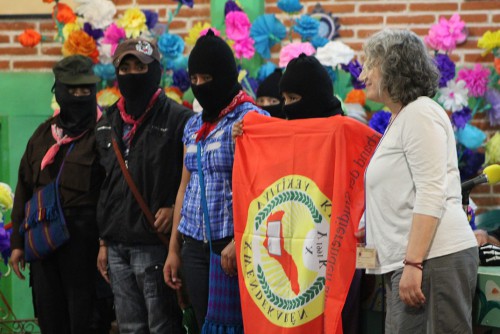
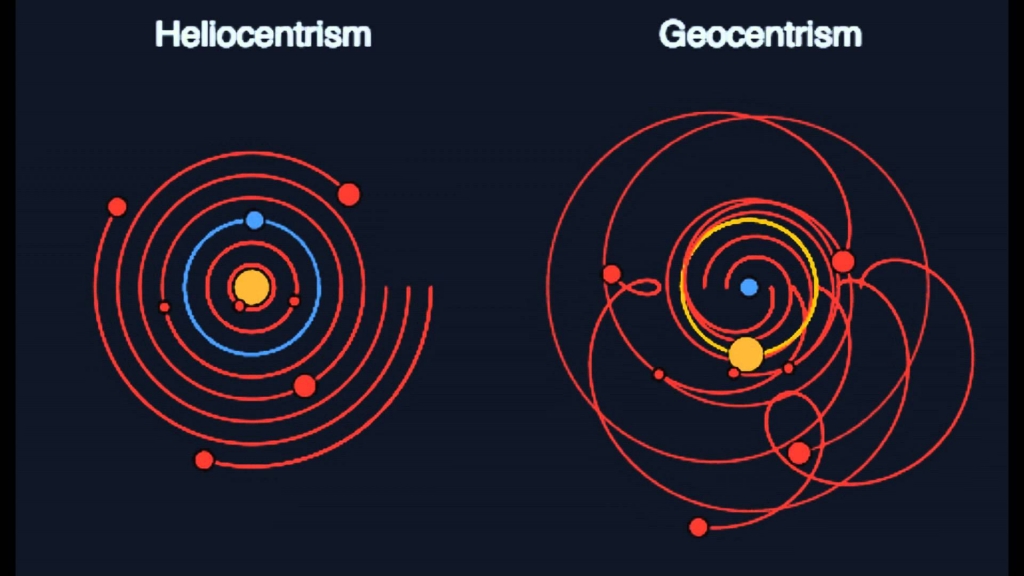
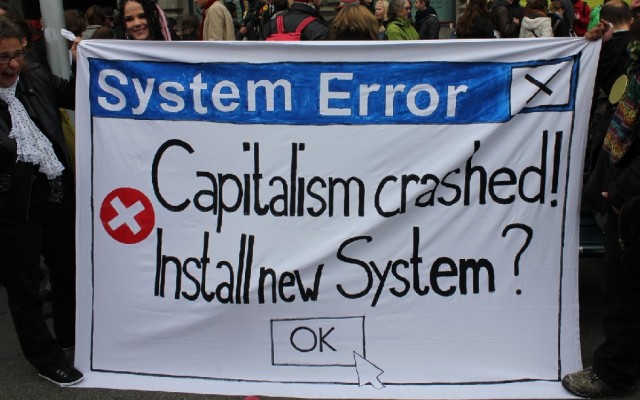

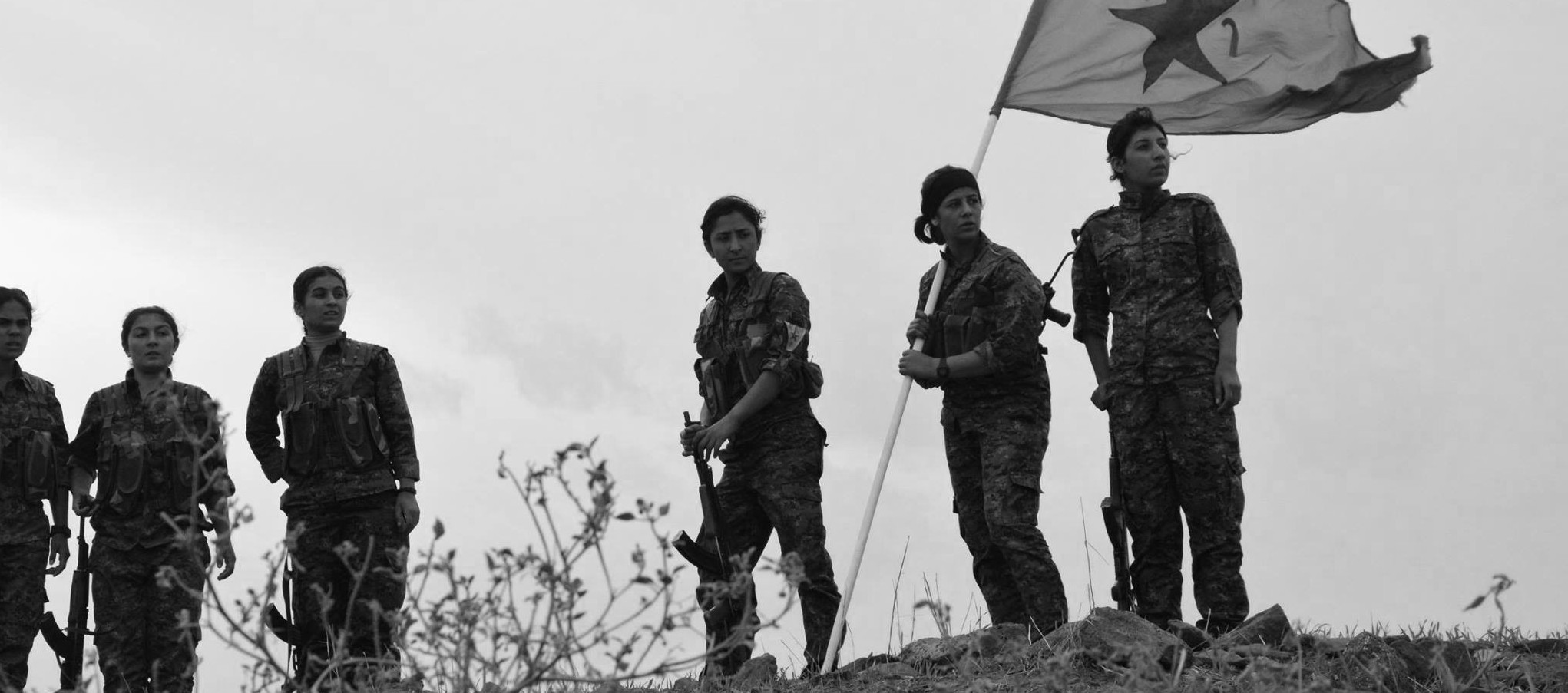
Havin Guneser: On Kurdish Struggle at EZLN Hydra Seminar

havin-guneser

“Without understanding how masculinity was socially formed, one cannot analyze the institution of state and therefore will not be accurately be able to define the war and power culture related to statehood… This is what paved the way for femicide and the exploitation and colonization of peoples…”

Listen to the full talk by Havin Guneser here.


Samantha Grossman: 1 in 4 Americans Apparently Unaware the Earth Orbits the Sun

This article was originally published Feb 16, 2014 at Time.

time-article

A National Science Foundation study involving 2,200 participants find that about 25 percent of Americans got this question wrong: ‘Does the Earth go around the sun, or does the sun go around the Earth?’

Does the Earth go around the sun, or does the sun go around the Earth?

When asked that question, 1 in 4 Americans surveyed answered incorrectly. Yes, 1 in 4. In other words, a quarter of Americans do not understand one of the most fundamental principles of basic science. So that’s where we are as a society right now.

The survey, conducted by the National Science Foundation, included more than 2,200 participants in the U.S., AFP reports. It featured a nine-question quiz about physical and biological science and the average score was a 6.5.

And the fact that only 74 percent of participants knew that the Earth revolved around the sun is perhaps less alarming than the fact that only 48 percent knew that humans evolved from earlier species of animals.

Here’s the thing, though: Americans actually fared better than Europeans who took similar quizzes — at least when it came to the sun and Earth question. Only 66 percent of European Union residents answered that one correctly.

We won’t know the full results of the survey—or its methodology—until the National Science Foundation delivers its report to President Obama and U.S. lawmakers. But on this evidence we may end up getting a new national holiday out of this: Spread the Word That the Earth Revolves Around the Sun Day.


Paul Mattick with John Clegg and Aaron Benanav: The Economic Crisis in Fact and Fiction

This article was originally published June 3, 2011 in The Brooklyn Rail.

mattick-article
Source: UK Progressive.

Paul Mattick’s most recent book, Business as Usual: The Economic Crisis and the Future of Capitalism, was just published by Reaktion Books. In late April, he sat down with John Clegg and Aaron Benanav of the journal Endnotes.

Rail: Recent reports suggest that the economy is growing again. The unemployment rate is stabilizing, or even declining, and the Dow is trending upwards. So was the crisis really that deep? What makes you think that we haven’t already seen the end of it?

Paul Mattick: Quite a few things. One is the ongoing difficulties in the world as a whole with regard to state finances and unemployment. It is a mistake to look simply at the United States. This is a global problem. There has been a parade of fiscal crises in Europe: in Portugal and to a certain extent Spain. The attempt to master the crisis has led to deepening depression-conditions in England and Greece. It has even reached China, where apparently high growth rates are leading to seemingly problematic rates of inflation—exactly like the pseudo-growth of the 1970s, which generated high inflation rates in the west. Even with respect to the United States, and I wouldn’t be so impressed by measures such as employment going up and down. To a certain extent, this reflects the fact that people are dropping out of the labor force. There are of course minute changes from month to month in the number of people who get jobs, but overall conditions remain extremely poor.

It’s also worth remembering that the GDP growth rate is an artificial construction. For example, since economic theory assumes that everyone who receives money is being paid for some service or good that has been produced, whenever someone from Goldman Sachs gets a bonus, that appears as part of the growth figures. If you give Lloyd Blankfein a $35 million bonus, it’s assumed that he has performed $35 million worth of services. The truth is that the growth rates are increasingly a measure of activity in the financial sector, so even today, all this remains completely imaginary. It’s nice if a person here or there gets a job, but the truth is the city of Detroit is still 25 percent smaller than it was ten years ago. The unemployment rate in Tampa, Florida—which I happened to read about today—even if it is one percent lower than it was last month, is still 11 percent. All over the world unemployment rates remain high. There is very little lending from banks, very little investment, and very little actual economic growth.

Rail: You spoke about this being a world crisis. Could say a little more about the major state responses to the crisis? How coordinated were those responses at a global level? Were there differences in the way that the crisis was handled between the US, Europe and East Asia, or between rich and poor countries?

Mattick: I don’t think the responses are very coordinated. As always in a period of crisis, there is an increase in competition: the different regions jockey to do the best they can for their national capitals. In the United States there was a small attempt at stimulus. It largely took the form of trying to preserve the financial structure, which is important not just in the United States but for the world economy. In Germany, they sat back and hoped that they would be able to export capital goods to other countries, while in the weaker economies of Europe, there were very serious collapses. The governments of Ireland, Spain, Portugal and Greece are now trying to safeguard the positions of local financial operators, to bail out the bond holders, to bail out the banks and to force local populations to bear the brunt of it. So the Euro bloc has become weaker as the better off countries, especially Germany and to a lesser extent France, find themselves having to pay for the collapsing situation in the weaker countries. In China, again, there is a different situation, because China doesn’t have a normal capital market. The Chinese government controls internal finance and created an enormous amount of debt in order to stimulate the Chinese economy, which is now running into serious problems. They’ve spent two years building empty cities and financing real estate bubbles. Now they seem to be reaching the limit of this, which people are very afraid of, both in China and in the rest of the world.

So each part of the world deals with the crisis on a different basis. If you have a lot of oil, like Qatar or Saudi Arabia, then you can sell it to the West and have a lot of money to play with. You can spend $36 billion trying to lower the level of protest in your cities. But if you don’t have any money, like Egypt, then you have to deal with a restless population. You are dependent on the richer countries propping you up.

Rail: Turning to the explanation of the crisis, we’ve often heard that the crisis was a matter of financial deregulation, but an alternative explanation common focuses on global trade imbalances between the US and China. To what extent are these imbalances responsible for financial bubbles, and can they be corrected?

Mattick: Well, there are of course trade imbalances, but the question is, why are there imbalances? Production facilities have tended to move from high-wage areas to low-wage areas. For example, the United States moved production from the northern and middle-western states to the south, then to South America and Asia. Rather than investing in new machinery, companies are trying to increase profit rates by lower the cost of labor power globally. In China, a large percentage of production occurs in facilities that are the result of foreign investment. So there is a Chinese economy, but the Chinese export-economy mostly just assembles goods that are produced elsewhere. Europe, the United States and certain countries in Asia, like Japan or Taiwan, are moving production to China, where extremely low-wage workers put together stuff that is then shipped to the rest of the world. So to an extent the appearance of a shift of production to China is an illusion. These are Western companies hiring Chinese workers—and paying a portion of the proceeds to the Chinese bureaucracy, so they’ll provide the production facilities and police the labor force. These factories remain dependent on Western investment and Western consumers. This is simply part of the attempt to lower labor costs in the West.

Rail: Internet econo-blogger Tyler Cowen recently wrote a book claiming that the US economy has been stagnant for the last forty years. He blames this stagnation on the exhaustion of existing technologies: “We have failed to recognize that we are at a technological plateau.” Would you agree with this explanation?

Mattick: No. You could say that the Western economy—not just in the United States but in Western Europe also—entered into a period of crisis in the mid-1970s. So for forty years there has been, not exactly stagnation, but very low levels of growth compared to the period right after the Second World War. Of course, there has been a lower level of technological development in this period than there was in the past. But this is largely due to the fact that there has been less money to invest. You could say if they had gigantic quantities of money available, companies today could probably develop solar power. After all, they have to find some substitute for fossil fuels. They say that it’s too expensive—but it’s too expensive because there isn’t sufficient capital to invest in the production of new forms of energy. To say that it’s too expensive is simply another way of saying that capital is not generating quantities of profit sufficient for developing new technologies. The problem isn’t that there aren’t enough scientists in the world, or enough mathematicians or solar workers. The problem is that they don’t have enough money. That also explains why, even with the existing technology, they’re not able to employ millions of people in Asia, Africa and Latin America. There simply is not enough money to continue at the given scale of investment. So it’s easy to blame this on a kind of failure of science, but that’s not the problem. The engineers are there, the science is there. The problem is that nobody has the money to invest in it, and that is a failure of capitalism to generate enough profit to continue its expansion.

Rail: But how much truth is there in this idea of stagnation, more generally? Wasn’t there a recovery in the 1980s? To what extent is the crisis today related to the crisis of the 1970s?

Mattick: I think this is the crisis of the 1970s. What you had from the 1980s onwards was various kinds of speculative bubbles. There was a certain amount of gain—gains made by moving the labor force to low wage areas. But since labor is only a small part of the productive system at the present time, there has been a low rate of profit and little technological development. So, beginning in the mid-1970s, there has been a steady shift away from investment in production and into investment in speculation, the buying and selling of companies, mergers and acquisitions, finance, etc. Much of what was called globalization in the 1990s was simply the buying and selling of stocks in various parts of the world. You can even see this in the vocabulary. As I point out in my book, what used to be called developing nations are now called developing markets—but the markets they have in mind are stock markets and real estate markets. There has been a general flow of money from investment in production to investment in finance. From the mid-1970s on—as Professor Robert Brenner of UCLA points out—there has been a decline in levels of investment decade by decade, and a decline in profitability, and this is simply another way of describing a situation of stagnation.

What’s going on now is the reappearance of the crisis that should have happened in the mid-1970s. The key idea in my book is that this crisis was put off by the creation of debt in all these forms: private debt, public debt, government debt. This was a historical novelty. There was a Keynesian idea during World War II that you could borrow money and then stop. But after the war, they were so afraid there would be a new crisis that they started to maintain, at all times, some low level of government spending. When the Golden Age ended in 1975, they got scared. There was an enormous outpouring of credit—and the invention of new credit instruments. And they managed in one way or another to put off the crisis for forty years. But there was a limit.

Finally it came in 2008—they just couldn’t keep the whole thing going any more. The apparatus of debt had been erected on a foundation of IOUs, which became so great that it couldn’t be sustained with respect to the actual production of value. I think this is a major event. I might be wrong—economics is not an exact science—but I think this is a deep depression. Some might compare it to the depression of the 1930s, but governments today don’t have the money they had in 1930. There is no repetition in history—that’s why you can’t learn from the past—so this is an absolutely unique situation: a major depression, but one in which the Keynesian apparatus is no longer available because the money has already been spent. The US has 14 trillion dollars in national debt. So now they just don’t know what to do.

Rail: Could you tell us what actually explains the long-term decline in the world economy since the 1970s?

That’s very complicated and contentious. Unfortunately, I believe that economics is a field in which the theories are mostly fake. Economics is more like a religion than a science. I think there is really only one explanation of the long term development of the capitalist system which seems to make sense, and which describes what has actually happened. This is the theory Karl Marx outlined Capital, which was published in the 19th century. This is a strange fact because today, for example in physics, no one would say we still have to read Newton. But the truth is that in the analysis of capitalism we have not advanced very far beyond Marx.

Basically Marx’s idea is that capitalism, like every society, is an organization of the human production process, which means that people work on their natural environment and transform it into forms that they can consume. Human beings are peculiar in that this process is culturally rather than biologically determined. In our culture today, social reproduction is dependent on the fact that access to natural resources is controlled by a small group of people, through the medium of money. Which means that the people who actually control the production process are interested not in production per se, but in an increase in their social control, which we call the making of profits. Goods are only produced if they can be produced in such a way that the owners of the production process—of capital—are able to make a profit. But since the human labor involved in the production process is the only source of the increase in social wealth, and since, under capitalist conditions, the attempt of owners of industry to compete with each other leads to a displacement of labor by machinery, this leads—in a way which is very hard to explain in a few minutes—to a decline in the rate of profitability. Marx thought that the cure for this tendency would be the recurrent phenomena of depressions. In a depression, capital investments are devalued, which allows the labor performed using the existing means of production to count for more. So depressions should lead to periods of prosperity. Roughly that seems to be what has happened in the history of capitalism. There has been a tendency for periods of prosperity to lead to depressions, and periods of depression to lead to renewed prosperity. This process has been going on, more or less, since the beginning of the nineteenth century. We are now in a renewed period of depression, due to the large expansion of capital that took place after the Second World War.

This is an almost meaningless description of an extremely complicated phenomenon, but the truth is there is no simple way to talk about it. It’s a very complex system, and it has to be analyzed in rather abstract terms. But as far as I can see, the history of capitalism as a system has pretty well confirmed Marx’s analysis, even though he made it very close to the beginning of capitalism. And I see no reason therefore to not accept that analysis as the explanation of what’s going on today.

Rail: But hasn’t economics made some advances since the 19th century? If not in contemporary academic economics departments, then at least through the great economists of the past hundred years, like Friedrich Hayek, Joseph Schumpeter, or John Maynard Keynes. Haven’t they added something?

Mattick: Friedrich Hayek has a mathematically sophisticated version of the mid-18th century theory of the economy, which was somewhat inaccurate then and even more inaccurate now. The one figure who made some progress is Keynes, who understood that the economics he had learned in college was inadequate to explain the events of his own lifetime, particularly the Great Depression. He could see that the theory that people like Hayek still believed—that capitalism is a system which fully utilizes all natural and human resources—was nonsense. Not only had there been crisis after crisis in the 19th century. There was now a crisis in the 20th century that was very serious. So he could see that capitalism is unable to utilize fully the resources that nature and human beings put at the behest of the economy. Keynes was driven back to a version of theories from the early-19th century, when people questioned—in response to the development of capitalist crises of the beginning of that century—the dogma that capitalism was a completely rational, welfare-maximizing system. Keynes had the idea that if the capitalists were unable or unwilling, for various psychological reasons, to utilize their social resources to create full employment (and thus the full use of natural and human resources), then the government should step in and borrow resources to do so. By the time Keynes had this idea, governments had already been doing this: Hitler in Germany and Roosevelt in the United States. But the falsity of Keynes’s analysis of the situation was shown after the Second World War, when it turned out that even during the ensuing period of prosperity, it was impossible for capitalist governments to cease to prop up the economy. The capitalist economy was not able to create a real prosperity on its own basis. It was still dependent on the government for additional finance. So the whole idea—that capitalism was naturally efficient but that under certain conditions inefficient, that in those moments the government could prime the pump, get the system going, and then withdraw—turned out not to be true. Thus Keynes’s theory was already recognized by the 1970s to be a failure, which accounts for the disappearance of Keynesianism in academic economics and the rise of various anti-Keynesian economic theories—and even this von Miesean return to a primitive belief in the trucking and bartering of goods as the foundation of social peace.

Rail: Speaking of Keynes, your father (Paul Mattick) wrote something of underground classic on the subject—Marx and Keynes—in 1962. To what extent did you rely on your father’s work when writing Business as Usual? On the surface, at least, we noted a stylistic difference between these two books. Does that indicate any difference of method?

Mattick: No, I would say not. And actually I would say that my father was very much a pupil of an earlier Marxist theorist, Henryk Grossman, who in one sentence of his great book The Law of Accumulation and Breakdown of the Capitalist System already had the entire content of Marx and Keynes. Grossman pointed out that, since the government is not an economic actor—it does not own economic resources—government involvement in the economy can only be at the expense of the private economy. It cannot be profit-creating and therefore cannot solve the problems of capitalist profitability. What was important about my father’s book is that it was a kind of thought experiment. The book was written in the late 1950s, although no one was willing to publish it. Everyone believed then that Keynesian methods had put an end to the business cycle, that the economy could now be controlled or even fine-tuned by government interventions. So my father said, let’s assume that Marx’s analysis is correct—what does that imply for the future of Keynesian methods? And he predicted more or less what happened: that Keynesianism would be unable to prevent a return of the business cycle—and even that the next depression would take the new form of a combination of inflation and stagnation. So you could say that it was one of the few examples in the history of social science in which there was an experiment, in which somebody said: okay, here’s this thing that people are doing all over the world—will it work? If this theory’s correct, then it can’t work. It didn’t work, so he was right. But actually I would say the credit doesn’t belong to my father. It belongs to Mr. Marx. It was simply an attempt to say that if Marx was right, then Keynes must be wrong. And it turned out that Marx was right and Keynes was wrong. But this was something that no one was willing to recognize. So this book is completely unread, completely unmentioned, completely unnoticed. But from a scientific point of view it’s an interesting phenomenon—that someone was able to make a prediction in social science that turned out to be correct. The fact that it has been ignored shows that, as a friend of mine once said, social science is mostly social and not very much science.

Rail: Contemporary left-economists, often relying on Keynes, have criticized recent austerity measures as detrimental to the recovery effort. Yet you argue that reductions in deficit-spending, with all their consequences for living standards, would be a necessary element of any real recovery on a capitalist basis. What would you say, then, to the workers who occupied the capitol building in Wisconsin? Are they acting in vain, or even against their own interests, if they want to retain their jobs?

Mattick: I would say that they are acting in their own interests insofar as what they are really fighting for is not the economy, but their pensions, their food, their living standards, their rent, etc. They are under an illusion if they think that their welfare is concordant with the welfare of the economy. People have to learn that the welfare of the economy, in a moment like this, is in contradiction to their own welfare. In Wisconsin, workers apparently went along with their unions, who were willing to sacrifice their members’ living conditions in order to prop up the Wisconsin economy. A more rational point-of-view on the part of Wisconsin workers would be to say, to hell with the Wisconsin economy!—we want food, we want boats to go sailing on the lake, we want pensions, and we want nice schools for our children. The truth is there is now a real conflict between the interests of ordinary people, so-called—that’s to say the working class—and the interests of the capitalist economy. The preservation and future prosperity of capitalism demands the impoverishment of the population, and if they prefer to be impoverished to save capitalism, well then, they will be impoverished. The instinctual desire not to be impoverished seems to me a intelligent one, but the problem is that they don’t yet understand that capitalism is not going give them back their pensions and their wages.

Rail: Does that mean that it’s simply impossible to fight against cuts?

Mattick: I think that anti-austerity struggles have to become more radical. They have to concentrate on immediate material goods. For example, there are now millions of people who have been thrown out of their houses. There are a lot of empty houses, so people have to begin moving into those houses. There is a lot of food, so people have to take the food. If factories have closed, people need to go into the factories and start producing goods. But they cannot expect that employers are going to give them jobs. If they could be employed profitably, they already would be, as I say in the book. And they can’t expect the government to give them jobs. The government doesn’t have any money. But that doesn’t mean there aren’t important ways to fight austerity. This is still a rich country. There’s all sorts of stuff around. People have to begin to take the stuff that’s there. They have to demand the immediate improvement in their living conditions—very concrete things. So instead of asking for work, which they cannot get, they should just ask for food. A very intelligent move would be to say, OK, you can’t give us jobs—then just feed us, feed us for nothing. It’s not like there’s no food.

Rail: Your book ends on a somber note—the vision of a coming catastrophe at once economic and ecological. We were hoping for a little more optimism from someone who believes, as you’ve said in another article, that another world is possible. Is this just an empty gesture or phrase? What is that other world, what does it look like, and what can people do to make it a reality?

Mattick: Well that’s what is so frustrating because it’s so obvious. We have this enormous productive apparatus. We have a world full of buildings, offices, schools, factories, farms, and technology. And there is absolutely no reason why people shouldn’t simply take that stuff and start using it. What holds them back is that, on the one hand, it doesn’t occur to them that they can do it and, on the other hand, that the police, the army—an enormous apparatus—prevents them from doing it. The way people are raised makes it very hard for them to think that you can just take this over, that this belongs to you. It’s funny—I was reading an article written in 1831 by the French revolutionary Blanqui with the wonderful title: “The man who makes the soup deserves to eat it.” He says it’s all very simple: if all the owners of capital were to disappear, the world would be exactly the same—you would have the same farms, the same factories—but if all the workers disappeared, then everyone would starve to death. We have not advanced one bit beyond that point of view. The problem is that people are so used to the existence of capitalism, they’re so used to the idea that you have to work for somebody else, that they don’t see that they can just take it over. What will move people to take that step? I think that it takes a very drastic experience to push people out of their normal mode of behavior.

This is why—although I don’t like catastrophe and personally I’m terrified by it like everybody else—you can see that there is a positive side, too. Let’s take a very present-day experience. People in Egypt have lived in tremendous poverty for a long time. But in the last year, the price of food went up by something like eighty percent. It just was too much. There was an enormous uprising. They got rid of Mr. Mubarak and his sons, and now they have General Tantawi—the army officers call him Mubarak’s poodle—Mr. Tantawi is running the country. So instead of Mubarak, his poodle is running the country. Nothing has changed. They’re in exactly the same position. Now they find—oh my God, it’s bigger. People think, OK, well, the next step would be to fight the army, but that’s a more serious problem. As long as the army was not willing to shoot you, you could get rid of one or two people. Now, how are you going to fight the army? You would have to have enormous strike movements and it would be very bloody, so you can see why people are scared.

However, it’s not impossible. The coming catastrophes are going to be gigantic—I read recently that the Indians are now building a wall between India and Bangladesh. They know that 100 million people are going to try to get into India just to live because of floods due to global warming and rising sea levels. So they are preparing to kill 100 million people. The American government is preparing militarily to prevent Mexicans from storming into the United States, as people starve in Mexico. So this is what the future holds. The existing situation is poised on an edge of catastrophe, which might take fifty years to unfold. At some point, people will have to deal with it. I don’t know if that’s optimism.

When I was younger, it seemed like it was about to happen: people in the streets, freedom, socialism—but it turns out that the human race is sluggish. The task is also scary. The army is big. Society is hard to understand, and no one really knows what’s going on. And it’s millions of people, and there’s religion, and there’s parents. I walk down the street, and I think, it’s just insane—don’t people know what’s happening? In 75 years this whole area is going to be under water, and they’re worrying about what kind of jeans they want to buy! It’s hard to imagine that what you experience right now is not going to be there in twenty years. During the First World War, it took until 1916 before the big demonstrations began in the cities of Germany. And it took another two years before people finally said, we’re not going to fight anymore. And that was rather mild—the First World War was nothing compared to the Second, and that was nothing compared to what’s coming now. Nearly 60 million died in the Second World War. Now we’re talking about hundreds of millions starving to death and drowning. So that’s why I’m not chipper about it. Socialism or barbarism, as Luxembourg said. Those are our two alternatives.


Cornel West: Goodbye, American neoliberalism. A new era is here

This article was originally published Nov 17, 2016 in The Guardian.

cornel-west-article
Photograph: Aris Messinis/AFP/Getty Images

The neoliberal era in the United States ended with a neofascist bang. The political triumph of Donald Trump shattered the establishments in the Democratic and Republican parties – both wedded to the rule of Big Money and to the reign of meretricious politicians.

The Bush and Clinton dynasties were destroyed by the media-saturated lure of the pseudo-populist billionaire with narcissist sensibilities and ugly, fascist proclivities. The monumental election of Trump was a desperate and xenophobic cry of human hearts for a way out from under the devastation of a disintegrating neoliberal order – a nostalgic return to an imaginary past of greatness.

White working- and middle-class fellow citizens – out of anger and anguish – rejected the economic neglect of neoliberal policies and the self-righteous arrogance of elites. Yet these same citizens also supported a candidate who appeared to blame their social misery on minorities, and who alienated Mexican immigrants, Muslims, black people, Jews, gay people, women and China in the process.

This lethal fusion of economic insecurity and cultural scapegoating brought neoliberalism to its knees. In short, the abysmal failure of the Democratic party to speak to the arrested mobility and escalating poverty of working people unleashed a hate-filled populism and protectionism that threaten to tear apart the fragile fiber of what is left of US democracy. And since the most explosive fault lines in present-day America are first and foremost racial, then gender, homophobic, ethnic and religious, we gird ourselves for a frightening future.

What is to be done? First we must try to tell the truth and a condition of truth is to allow suffering to speak. For 40 years, neoliberals lived in a world of denial and indifference to the suffering of poor and working people and obsessed with the spectacle of success. Second we must bear witness to justice. We must ground our truth-telling in a willingness to suffer and sacrifice as we resist domination. Third we must remember courageous exemplars like Martin Luther King Jr, who provide moral and spiritual inspiration as we build multiracial alliances to combat poverty and xenophobia, Wall Street crimes and war crimes, global warming and police abuse – and to protect precious rights and liberties.

Rightwing attacks on Obama – and Trump-inspired racist hatred of him – have made it nearly impossible to hear the progressive critiques of Obama. The president has been reluctant to target black suffering – be it in overcrowded prisons, decrepit schools or declining workplaces. Yet, despite that, we get celebrations of the neoliberal status quo couched in racial symbolism and personal legacy. Meanwhile, poor and working class citizens of all colors have continued to suffer in relative silence.

In this sense, Trump’s election was enabled by the neoliberal policies of the Clintons and Obama that overlooked the plight of our most vulnerable citizens. The progressive populism of Bernie Sanders nearly toppled the establishment of the Democratic party but Clinton and Obama came to the rescue to preserve the status quo. And I do believe Sanders would have beat Trump to avert this neofascist outcome!

In this bleak moment, we must inspire each other driven by a democratic soulcraft of integrity, courage, empathy and a mature sense of history – even as it seems our democracy is slipping away.

We must not turn away from the forgotten people of US foreign policy – such as Palestinians under Israeli occupation, Yemen’s civilians killed by US-sponsored Saudi troops or Africans subject to expanding US military presence.

As one whose great family and people survived and thrived through slavery, Jim Crow and lynching, Trump’s neofascist rhetoric and predictable authoritarian reign is just another ugly moment that calls forth the best of who we are and what we can do.

For us in these times, to even have hope is too abstract, too detached, too spectatorial. Instead we must be a hope, a participant and a force for good as we face this catastrophe.


Dilar Dirik: Building Democracy without the State

This article was originally published in ROAR Magazine.

Rojava flags II breaker

“When people first came to our house a few years ago to ask if our family would like to participate in the communes, I threw stones at them to keep them away,” laughs Bushra, a young woman from Tirbespiye, Rojava. The mother of two belongs to an ultra-conservative religious sect. Before, she had never been allowed to leave her home and used to cover her entire body except her eyes.

“Now I actively shape my own community,” she says with a proud and radiant smile. “People come to me to seek help in solving social issues. But at the time, if you had asked me, I wouldn’t even have known what ‘council’ meant or what people do in assemblies.”

Today, around the world, people resort to alternative forms of autonomous organization to give their existence meaning again, to reflect human creativity’s desire to express itself as freedom. These collectives, communes, cooperatives and grassroots movements can be characterized as the people’s self-defense mechanisms against the encroachment of capitalism, patriarchy and the state.

At the same time, many indigenous peoples, cultures and communities that faced exclusion and marginalization have protected their communalist ways of living until this day. It is striking that communities that protected their existence against the evolving world order around them are often described in negative terms, as “lacking” somethingnotably, a state. The positivist and deterministis tendencies that dominate today’s historiography render such communities unusual, uncivilized, backward. Statehood is assumed to be an inevitable consequence of civilization and modernity; a natural step in history’s linear progress.

There are undoubtedly some genealogical and ontological differences between, for lack of a better word, “modern” revolutionary communes, and natural, organic communities. The former are developing primarily among radical circles in capitalist societies as uprisings against the dominant system, while the latter pose a threat to the hegemonic powers by nature of their very survival. But still, we cannot say that these organic communes are non-political, as opposed to the metropolitan communes with their intentional, goal-oriented politics.

Centuries, perhaps millennia of resistance against the capitalist world order are in fact very radical acts of defiance. For such communities, relatively untouched by global currents due to their characteristic features, natural geography or active resistance, communal politics is simply a natural part of the world. That is why many people in Rojava, for instance, where a radical social transformation is currently underway, refer to their revolution “a return to our nature” or “the regaining of our social ethics.”

Throughout history, the Kurds suffered all sorts of denial, oppression, destruction, genocide and assimilation. They were excluded from the statist order on two fronts: not only were they denied their own state, they were simultaneously excluded from the mechanisms of the state structures around them. Yet the experience of statelessness also helped protect many societal ethics and values, as well as a sense of communityespecially in the rural and mountainous villages far from the cities.

To this day, Alevi-Kurdish villages in particular are characterized by processes of common solution-finding and reconciliation rituals for social disputes based on ethics and forgiveness to the benefit of the community. But while this form of life is quite prevalent in Kurdistan, there is also a conscious new effort to establish a political system centered around communal valuesthe system of Democratic Confederalism, built through democratic autonomy with the commune at its heart.

DEMOCRATIC CONFEDERALISM IN ROJAVA

The Kurdistan Workers’ Party (PKK), like many national liberation movements, initially thought that the creation of an independent state would be the solution to violence and oppression. However, with the changing world after the collapse of the Soviet Union, the movement began to develop a fundamental self-criticism as well as a criticism of the dominant socialist politics of the time, which was still very much focused on seizing state power. Towards the end of the 1990s the PKK, under the leadership of Abdullah Öcalan, began to articulate an alternative to the nation state and state socialism.

Upon studying the history of Kurdistan and the Middle East, as well as the nature of power, the current economic system and ecological issues, Öcalan came to the conclusion that the reason for humanity’s “freedom problem” was not statelessness but the emergence of the state. In an attempt to subvert the domination of the system that institutionalized itself across the globe over the span of 5,000 years as a synthesis of patriarchy, capitalism and the nation state, this alternative paradigm is based on the very oppositewomen’s liberation, ecology and grassroots democracy.

Democratic Confederalism is a social, political, and economic model of self-administration of different peoples, pioneered by women and the youth. It attempts to practically express the people’s will by viewing democracy as a method rather than an aim alone. It is democracy without the state.

While it proposes new normative structures to establish a conscious political system, Democratic Confederalism also draws upon millennia-old forms of social organization that are still in existence across communities in Kurdistan and beyond. This model may seem far-fetched to our contemporary imagination, but it actually resonates well with the strong desire for emancipation among the different peoples in the region. Although the system has been implemented in Bakur (North Kurdistan) for years, within the limits of Turkish state repression, it was in Rojava (West Kurdistan) that a historic opportunity emerged to put Democratic Confederalism into practice.

The system places “democratic autonomy” at its heart: people organize themselves directly in the form of communes and create councils. In Rojava, this process is facilitated by Tev-Dem, the Movement for a Democratic Society. The commune is made up of a consciously self-organized neighborhood and constitutes the most essential and radical aspect of the democratic practice. It has committees working on different issues like peace and justice, economy, safety, education, women, youth and social services.

The communes send elected delegates to the councils. Village councils send delegates to the towns, town councils send delegates to the cities, and so on. Each of the communes is autonomous, but they are linked to one another through a confederal structure for the purposes of coordination and the safeguarding of common principles. Only when issues cannot be resolved at the base, or when issues transcend the concerns of the lower-level councils, are they delegated to the next level. The “higher” instances are accountable to the “lower” levels and report on their actions and decisions.

While the communes are the areas for problem solving and organizing everyday life, the councils create action plans and policies for cohesion and coordination. At the start of the revolution and in the newly liberated areas, assemblies had to erect people’s councils first and only later began to develop the more decentralized grassroots organizational structures in the form of communes.

The communes work towards a “moral-political” society made up of conscious individuals who understand how to resolve social issues and who take care of everyday self-governance as a common responsibility, rather than submitting to bureaucratic elites. All of this relies on the voluntary and free participation of the people, as opposed to coercion and the rule of law.

It is of course difficult to raise society’s consciousness in a short span of time, especially where war conditions, embargoes, internalized mentalities and ancient despotic structures have been deeply institutionalized and can lead to power abuses and apolitical mindsets. An alternative education system, organized through academies, aims to promote a healthy social mentality, while self-organization practically reproduces a conscious society by mobilizing it in all spheres of life.

The women and youth organize autonomously and embody the social dynamics that are naturally inclined towards more democracy and less hierarchy. They position themselves “to the left” of the democratic autonomy model and formulate new forms of knowledge production and reproduction.

Today, the Kurdish freedom movement splits power equally between one woman and one man, from Qandil to Qamishlo to Paris. The idea behind the co-chair principle is both symbolic and practicalit decentralizes power and promotes consensus finding while symbolizing the harmony between women and men. Only women have the right to elect the female co-chair while the male co-chair is elected by everyone. Women organize their own, stronger, more ideologically conscious structures towards a women’s confederation, starting with autonomous women’s communes.

THE PRINCIPLE OF THE DEMOCRATIC NATION

Another important principle articulated by Öcalan is the “democratic nation”. Unlike the nation state’s monist doctrine, which justifies itself through a chauvinistic myth, this concept envisions a society based on a common social contract and fundamental ethical principles such as gender equality. Thus, all individuals and groups, ethnic, religious, linguistic, gender, intellectual identities and tendencies can express themselves freely and add diversity to this expansive, ethics-based nation in order to secure its democratization. The more diverse the nation, the stronger its democracy. The different groups and sections are also in charge of democratizing themselves from within.

In Rojava, Kurds, Arabs, Syriac Christians, Armenians, Turkmen and Chechens try to create a new life together. The same logic underlies the project of the People’s Democratic Party, or HDP, across the border in Turkey. The HDP united all communities of Mesopotamia and Anatolia under the umbrella of “free togetherness” in the democratic nation.

Among its MPs it counts Kurds, Turks, Armenians, Arabs, Assyrians, Muslims, Alevis, Christians and Yazidisa greater diversity than any other party in the Turkish Parliament. Contrasted with the monopolism of the nation-state ideology, the concept of the democratic nation serves as an ideological self-defense mechanism of diverse peoples.

Although many different communities actively participate in the Rojava revolution, long-standing resentments prevail. Entire tribal confederations of Arabs unilaterally expressed their support for the administration, but in some parts, Arabs remain suspicious. Secret service documents reveal that already in the early 1960s, Syria’s Baath party made highly sophisticated plans to pitch different communities against one another, especially in Cizire. On top of the pre-existing tensions, external forces additionally fuel and instrumentalize conflict between different communities to further their own agendas. The establishment of unity between the different ethnic and religious groups of Syria, and in the Middle East more generally, would make it more difficult to divide and rule the region.One Arab member of the Rojava administration explained why this democratic model counts on so little support from the established as well as newly formed political groups in the region and beyond:

The democratic autonomy system in our three cantons shakes and upsets the whole world because the capitalist system does not want freedom and democracy for the Middle East, despite all its pretensions. That is why everyone attacks Rojava. The different forms of state exemplified by the Syrian Arab Republic under Assad and the Islamic State are two sides of the same coin as they deny and destroy the diversity mosaic of our region. But more and more Arabs from the rest of Syria come to Rojava to learn about democratic autonomy because they see a perspective for freedom here.

AN ALTERNATIVE ECONOMIC AND POLITICAL VISION

The effective system of self-organization, combined to some extent with the embargo, which necessitated self-reliance and thereby fueled creativity, spared Rojava from economic corruption through internal capitalist mindsets or external exploitation. Yet in order to defend revolutionary values beyond the war, a calibrated economic vision is needed for a socially just, ecological, feminist economy that can sustain an impoverished, traumatized and brutalized population.

How to engage wealthy people, who do not care for cooperatives, and avoid being charged with authoritarianism? How to arrange emancipatory and liberationist principles in the urgency of war and a survival economy? How to decentralize the economy while securing justice and revolutionary cohesion? For the people in Rojava, the answer lies in education.

What does ecology mean to you?” a woman at the Ishtar women’s academy in Rimelan asks her peers in a room decorated with photos of women like Sakine Cansiz and Rosa Luxemburg. An older woman with traditional tattoos on her hands and face responds: “To me, being a mother means to be ecological. To live in harmony with the community and nature. Mothers know best how to maintain and organize this harmony.” Perhaps it is the ecological question that most clearly illustrates Rojava’s dilemma of having great principles and intentions and the willingness to sacrifice, while often lacking the conditions to implement these ideals. For obvious reasons, survival often has priority over environmentalism.

For the moment, at least, it is possible to speak of a transitional dual system in which the democratic self-administration of Rojava lays out revolutionary and ecological principles, carefully maneuvering them in war and real politics, while the grassroots movement organizes the population from below. At the cantonal level, especially with regards to foreign policy-related issues, centralist or at least non-revolutionary practices are to some extent inevitable, especially because Rojava is politically and economically between a rock and a hard place. It is the democratic autonomy system arising from the base that people generally refer to when they speak of the “Rojava revolution”.

The decentralizing dynamics of the grassroots organization, most notably in the communes, even serve as an internal opposition to the cantons and facilitate the democratization of the latter, which, due to their complicated political geographyfurther limited by non-revolutionary parties and groups withincan tend towards a concentration of power (though the cantons, as they currently are, are still far more decentralized and democratic than ordinary states).

Far more important than the exact mechanisms through which the popular will is expressed, is the meaning and impact of democratic autonomy on the people themselves. If I were to describe “radical democracy”, I would think especially of the working class people, the sometimes illiterate women in neighborhoods who decided to organize themselves in communes and who now make politics come to life. Children’s laughter and games, cackling chicken, scooting plastic chairs compose the melody for the stage in which decisions on electricity hours and neighborhood disputes are made. One should also note that the structures function better in rural areas and small neighborhoods than in big and complex cities, where more effort is needed to engage people. Here, power belongs to people who never had anything and who now write their own history.

Do you want to see our vegetables?” Qadifa, an older Yazidi woman asks me in a center of Yekîtiya Star, the women’s movement. She appears to have little interest in explaining the new system, but she is keen to show its fruits instead. We continue our conversation on the transformations of everyday life in Rojava while eating the delicious tomatoes of a women’s cooperative in the backyard.

Self-determination in Rojava is being lived in the here and now, in everyday practice. Thousands of women like Qadifa, women previously completely marginalized, invisible and voiceless, now assume leadership positions and shape society. Today, in the mornings, they can for the first time harvest their own tomatoes from the land that was colonized by the state for decades, while acting as judges in people’s courts in the afternoon.

Many families dedicate themselves fully to the revolution now; especially those who lost loved ones. Many family homes slowly start to function like the people’s houses (“mala gel) that coordinate the population’s needs: people walk into each other’s houses with their children to criticize or discuss or suggest ideas on how to improve their new lives. Dinner table topics have changed. Social issues literally become social, by becoming everyone’s responsibility. Every member of the community becomes a leader.

The slow transition of social decision-making from assigned buildings to the areas of everyday life is a fruit of the efforts to build a new moral-political society. For people from advanced capitalist countries this direct way of being in charge of one’s life can seem scary sometimes, especially when important things like justice, education and security are now in the hands of people like oneself, rather than being surrendered to anonymous state apparatuses.

THE COMMUNE’S LEGACY OF RESISTANCE

One night I am sitting near Tell Mozan, once home to Urkesh, the 6,000-year-old ancient capital of the Hurrians. Nearby is the border between Syria and Turkey, less than a century old. While drinking tea with Meryem, a female commander of Kobane, we watch the lights of the town of Mardin in North Kurdistan, on the other side of the border.

We fight on behalf of the community, the oppressed, of all women, for the unwritten pages of history,” she says. Meryem is one of the many women who met Abdullah Öcalan in her youth, when he arrived in Rojava back in the 1980s. Like thousands of women, in a quest for justice beyond her own life, one day she decided to become a freedom fighter in this region that is at the same time home to thousands of honor killings and thousands of goddesses, worshiped in all shapes and sizes.

What attracted anti-systemic movements around the world to the historic resistance in Kobane were perhaps the many ways in which the town’s defense mirrored a millennia-old current of human struggle; the ways in which it carried universal traits that resonated with collective imaginaries of a different world. Many comparisons were made with the Paris Commune, the Battle of Stalingrad, the Spanish Civil War, and other almost mythical instances of popular resistance.

In the ziggurats of Sumer, massive temple complexes in ancient Mesopotamia, many hierarchical mechanisms began to be institutionalized for the first time: patriarchy, the state, slavery, the standing army and private propertythe beginning of the formalized class society. This era brought about a far-reaching social rupture characterized by the loss of women’s social status and the rise of the dominant male, especially the male priest, who seized the monopoly on knowledge. But this is also where amargi, the first word for the concept of freedom, literally “the return to mother”, emerged around 2,300 B.C.

Öcalan proposes the idea of two civilizations: he claims that towards the end of the Neolithic Age with the rise of hierarchical structures in ancient Sumer a civilization developed based on hierarchy, violence, subjugation and monopolismthe “mainstream” or “dominant civilization”. By contrast, what he calls “democratic civilization” represents the historic struggles of the marginalized, the oppressed, the poor and the excluded, especially women. Democratic Confederalism is therefore a political product and manifestation of this age-old democratic civilization.

The democratic autonomy model it has given rise to, in turn, is not only a promising perspective for a peaceful and just solution to the traumatic conflicts of the region; in many ways, the emergence of the Rojava revolution illustrates how democratic autonomy may actually be the only way to survive. In this sense, the revolutionary commune is a historical heritage, a source of collective memory for the forces of democracy around the globe, and a conscious mechanism of self-defense against the state system. It carries a millennia-old legacy and manifests itself in novel ways today.

What unites historic moments of human resistance and the desire for another world, from the first freedom fighters of history to the Paris commune to the uprising of the Zapatistas on to the freedom squares in Rojava, is the unbreakable power to dare to imagine. It is the courage to believe that oppression is not fate. It is the expression of humanity’s ancient desire to set itself free.

Bijî komunên me! Vive la commune!

Dilar Dirik is a Kurdish activist and a PhD candidate in the Sociology Department of the University of Cambridge. Her work examines the role of the women’s struggle in articulating and building freedom in Kurdistan. She regularly writes on the Kurdish freedom movement for several international media.


Kali Akuno: Until We Win: Black Labor and Liberation in the Disposable Era

This article was originally published Sep 4, 2015 in Counterpunch.

kali-akuno-article

Since the rebellion in Ferguson, Missouri in August 2014, Black people throughout the United States have been grappling with a number of critical questions such as why are Black people being hunted and killed every 28 hours or more by various operatives of the law? Why don’t Black people seem to matter to this society? And what can and must we do to end these attacks and liberate ourselves? There are concrete answers to these questions. Answers that are firmly grounded in the capitalist dynamics that structure the brutal European settler-colonial project we live in and how Afrikan people have historically been positioned within it.

The Value of Black Life

There was a time in the United States Empire, when Afrikan people, aka, Black people, were deemed to be extremely valuable to the “American project”, when our lives as it is said, “mattered”. This “time” was the era of chattel slavery, when the labor provided by Afrikan people was indispensable to the settler-colonial enterprise, accounting for nearly half of the commodified value produced within its holdings and exchanged in “domestic” and international markets. Our ancestors were held and regarded as prize horses or bulls, something to be treated with a degree of “care” (i.e. enough to ensure that they were able to work and reproduce their labor, and produce value for their enslavers) because of their centrality to the processes of material production.

What mattered was Black labor power and how it could be harnessed and controlled, not Afrikan humanity. Afrikan humanity did not matter – it had to be denied in order create and sustain the social rationale and systemic dynamics that allowed for the commodification of human beings. These “dynamics” included armed militias and slave patrols, iron-clad non-exception social clauses like the “one-drop” rule, the slave codes, vagrancy laws, and a complex mix of laws and social customs all aimed at oppressing, controlling and scientifically exploiting Black life and labor to the maximum degree. This systemic need served the variants of white supremacy, colonial subjugation, and imperialism that capitalism built to govern social relations in the United States. All of the fundamental systems created to control Afrikan life and labor between the 17th and 19th centuries are still in operation today, despite a few surface moderations, and serve the same basic functions.

The correlation between capital accumulation (earning a profit) and the value of Black life to the overall system has remained consistent throughout the history of the US settler-colonial project, despite of shifts in production regimes (from agricultural, to industrial, to service and finance oriented) and how Black labor was deployed. The more value (profits) Black labor produces, the more Black lives are valued. The less value (profits) Black people produce, the less Black lives are valued. When Black lives are valued they are secured enough to allow for their reproduction (at the very least), when they are not they can be and have been readily discarded and disposed of. This is the basic equation and the basic social dynamic regarding the value of Black life to US society.

The Age of Disposability

We are living and struggling through a transformative era of the global capitalist system. Over the past 40 years, the expansionary dynamics of the system have produced a truly coordinated system of resource acquisition and controls, easily exploitable and cheap labor, production, marketing and consumption on a global scale. The increasingly automated and computerized dynamics of this expansion has resulted in millions, if not billions, of people being displaced through two broad processes: one, from “traditional” methods of life sustaining production (mainly farming), and the other from their “traditional” or ancestral homelands and regions (with people being forced to move to large cities and “foreign” territories in order to survive). As the International Labor Organization (ILO) recently reported in its World Employment and Social Outlook 2015 paper, this displacement renders millions to structurally regulated surplus or expendable statuses.

Capitalist logic does not allow for surplus populations to be sustained for long. They either have to be reabsorbed into the value producing mechanisms of the system, or disposed of. Events over the past 20 (or more) years, such as the forced separation of Yugoslavia, the genocide in Burundi and Rwanda, the never ending civil and international wars in Zaire/Congo and central Afrikan region, the mass displacement of farmers in Mexico clearly indicate that the system does not posses the current capacity to absorb the surplus populations and maintain its equilibrium.

The dominant actors in the global economy – multinational corporations, the trans-nationalist capitalist class, and state managers – are in crisis mode trying to figure out how to best manage this massive surplus in a politically justifiable (but expedient) manner.

This incapacity to manage crisis caused by capitalism itself is witnessed by numerous examples of haphazard intervention at managing the rapidly expanding number of displaced peoples such as:

* The ongoing global food crisis (which started in the mid-2000’s) where millions are unable to afford basic food stuffs because of rising prices and climate induced production shortages;

* The corporate driven displacement of hundreds of millions of farmers and workers in the global south (particularly in Africa and parts of Southeast Asia);

* Military responses (including the building of fortified walls and blockades) to the massive migrant crisis confronting the governments of the United States, Western Europe, Australia, Malaysia, Indonesia, Singapore, etc.;

*The corporate driven attempt to confront climate change almost exclusively by market (commodity) mechanisms;

*The scramble for domination of resources and labor, and the escalating number of imperialist facilitated armed conflicts and attempts at regime change in Africa, Asia (including Central Asia) and Eastern Europe.

More starkly, direct disposal experiments are also deepening and expanding:

* Against Afrikans in Colombia,

* Haitians in the Dominican Republic,

* Sub-Saharan Afrikans in Libya,

* Indigenous peoples in the Andean region,

* The Palestinians in Gaza, Adivasis in India,

* The Rohingya’s in Myanmar and Bangladesh,

* And the list goes on.

Accompanying all of this is the ever expanding level of xenophobia and violence targeted at migrants on a world scale, pitting the unevenly pacified and rewarded victims of imperialism against one other as has been witnessed in places like South Africa over the last decade, where attacks on migrant workers and communities has become a mainstay of political activity.

The capitalist system is demonstrating, day by day, that it no longer possesses the managerial capacity to absorb newly dislocated and displaced populations into the international working class (proletariat), and it is becoming harder and harder for the international ruling class to sustain the provision of material benefits that have traditionally been awarded to the most loyal subjects of capitalisms global empire, namely the “native” working classes in Western Europe and settlers in projects like the United States, Canada, and Australia.

When the capitalist system can’t expand and absorb it must preserve itself by shifting towards “correction and contraction” – excluding and if necessary disposing of all the surpluses that cannot be absorbed or consumed at a profit). We are now clearly in an era of correction and contraction that will have genocidal consequences for the surplus populations of the world if left unaddressed.

This dynamic brings us back to the US and the crisis of jobs, mass incarceration and the escalating number of extrajudicial police killings confronting Black people.

The Black Surplus Challenge/Problem

Afrikan, or Black, people in the United States are one of these surplus populations. Black people are no longer a central force in the productive process of the United States, in large part because those manufacturing industries that have not completely offshored their production no longer need large quantities of relatively cheap labor due to automation advances. At the same time agricultural industries have been largely mechanized or require even cheaper sources of super-exploited labor from migrant workers in order to ensure profits.

Various campaigns to reduce the cost of Black labor in the US have fundamentally failed, due to the militant resistance of Black labor and the ability of Black working class communities to “make ends meet” by engaging in and receiving survival level resources from the underground economy, which has grown exponentially in the Black community since the 1970’s. (The underground economy has exploded worldwide since the 1970’s due to the growth of unregulated “grey market” service economies and the explosion of the illicit drug trade. Its expansion has created considerable “market distortions” throughout the world, as it has created new value chains, circuits of accumulation, and financing streams that helped “cook the books” of banking institutions worldwide and helped finance capital become the dominant faction of capital in the 1980’s and 90’s).

The social dimensions of white supremacy regarding consumer “comfort”, “trust” and “security” seriously constrain the opportunities of Black workers in service industries and retail work, as significant numbers of non-Black consumers are uncomfortable receiving direct services from Black people (save for things like custodial and security services). These are the root causes of what many are calling the “Black jobs crisis”. The lack of jobs for Black people translates into a lack of need for Black people, which equates into the wholesale devaluation of Black life. And anything without value in the capitalist system is disposable.

The declining “value” of Black life is not a new problem – Black people have constituted an escalating problem in search of a solution for the US ruling class since the 1960’s. Although the US labor market started to have trouble absorbing Afrikan workers in the 1950’s, the surplus problem didn’t reach crisis proportions until the late 1960’s, when the Black Liberation Movement started to critically impact industrial production with demands for more jobs, training and open access to skilled and supervisorial work (which were “occupied” by white seniority-protected workers), higher wages, direct representation (through instruments like the League of Revolutionary Black Workers), constant strikes, work stoppages, other forms of industrial action, militant resistance to state and non-state forces of repression and hundreds of urban rebellions.

This resistance occurred at the same time that the international regime of integrated production, trade management, and financial integration, and currency convergence instituted by the United States after WWII, commonly called the Bretton Woods regime, fully maturated and ushered in the present phase of globalization. This regime obliterated most exclusivist (or protectionist) production regimes and allowed international capital to scour the world for cheaper sources of labor and raw materials without fear of inter-imperialist rivalry and interference (as predominated during earlier periods). Thus, Black labor was hitting its stride just as capital was finding secure ways to eliminate its dependence upon it (and Western unionized labor more generally) by starting to reap the rewards of its post-WWII mega-global investments (largely centered in Western Europe, Australia, Japan, South Korea, and Taiwan).

One reward of these mega-global investments for US capital was that it reduced the scale and need for domestic industrial production, which limited the ability of Black labor to disrupt the system with work stoppages, strikes, and other forms of industrial action. As US capital rapidly reduced the scale of its domestic production in the 1970’s and 80’s, it intentionally elevated competition between white workers and Afrikan and other non-settler sources of labor for the crumbs it was still doling out. The settler-world view, position, and systems of entitlement possessed by the vast majority of white workers compelled them to support the overall initiatives of capital and to block the infusion of Afrikan, Xicano, Puerto Rican and other non-white labor when there were opportunities to do so during this period.

This development provided the social base for the “silent majority,” “law and order,” “tuff on crime,” “war on drugs,” “war on gangs and thugs” campaigns that dominated the national political landscape from the late 1960’s through the early 2000’s, that lead to mass incarceration, racist drug laws, and militarized policing that have terrorized Afrikan (and Indigenous, Xicano, Puerto Rican, etc.) communities since the 1970’s.

To deal with the crisis of Black labor redundancy and mass resistance the ruling class responded by creating a multipronged strategy of limited incorporation, counterinsurgency, and mass containment. The stratagem of limited incorporation sought to and has partially succeeded in dividing the Black community by class, as corporations and the state have been able to take in and utilize the skills of sectors of the Black petit bourgeoisie and working class for their own benefit. The stratagem of counterinsurgency crushed, divided and severely weakened Black organizations. And the stratagem of containment resulted in millions of Black people effectively being re-enslaved and warehoused in prisons throughout the US empire.

This three-pronged strategy exhausted itself by the mid-2000 as core dynamics of it (particularly the costs associated with mass incarceration and warehousing) became increasingly unprofitable and therefore unsustainable. Experiments with alternative forms of incarceration (like digitally monitored home detainment) and the spatial isolation and externalization of the Afrikan surplus population to the suburbs and exurbs currently abound, but no new comprehensive strategy has yet been devised by the ruling class to solve the problem of what to do and what politically can be done to address the Black surplus population problem. All that is clear from events like the catastrophe following Hurricane Katrina and the hundreds of Afrikans being daily, monthly, and yearly extra-judicially killed by various law enforcement agencies is that Black life is becoming increasingly more disposable. And it is becoming more disposable because in the context of the American capitalist socio-economic system, Black life is a commodity rapidly depreciating in value, but still must be corralled and controlled.


A Potential Path of Resistance

Although Afrikan people are essentially “talking instruments” to the overlords of the capitalist system, Black people have always possessed our own agency. Since the dawn of the Afrikan slave trade and the development of the mercantile plantations and chattel slavery, Black people resisted their enslavement and the systemic logic and dynamics of the capitalist system itself.

The fundamental question confronting Afrikan people since their enslavement and colonization in territories held by the US government is to what extent can Black people be the agents and instruments of their own liberation and history? It is clear that merely being the object or appendage of someone else’s project and history only leads to a disposable future. Black people have to forge their own future and chart a clear self-determining course of action in order to be more than just a mere footnote in world history.

Self-determination and social liberation, how do we get there? How will we take care of our own material needs (food, water, shelter, clothing, health care, defense, jobs, etc.)? How will we address the social contradictions that shape and define us, both internally and externally generated? How should we and will we express our political independence?

There are no easy or cookie cutter answers. However, there are some general principles and dynamics that I believe are perfectly clear. Given how we have been structurally positioned as a disposable, surplus population by the US empire we need to build a mass movement that focuses as much on organizing and building autonomous, self-organized and executed social projects as it focuses on campaigns and initiatives that apply transformative pressure on the government and the forces of economic exploitation and domination. This is imperative, especially when we clearly understand the imperatives of the system we are fighting against.

The capitalism system has always required certain levels of worker “reserves” (the army of the unemployed) in order to control labor costs and maintain social control. But, the system must now do two things simultaneously to maintain profits: drastically reduce the cost of all labor and ruthlessly discard millions of jobs and laborers. “You are on your own,” is the only social rationale the system has the capacity to process and its overlords insist that “there is no alternative” to the program of pain that they have to implement and administer. To the system therefore, Black people can either accept their fate as a disposable population, or go to hell. We have to therefore create our own options and do everything we can to eliminate the systemic threat that confronts us.

Autonomous projects are initiatives not supported or organized by the government (state) or some variant of monopoly capital (finance or corporate industrial or mercantile capital). These are initiatives that directly seek to create a democratic “economy of need” around organizing sustainable institutions that satisfy people’s basic needs around principles of social solidarity and participatory or direct democracy that intentionally put the needs of people before the needs of profit. These initiatives are built and sustained by people organizing themselves and collectivizing their resources through dues paying membership structures, income sharing, resource sharing, time banking, etc., to amass the initial resources needed to start and sustain our initiatives. These types of projects range from organizing community farms (focused on developing the capacity to feed thousands of people) to forming people’s self-defense networks to organizing non-market housing projects to building cooperatives to fulfill our material needs. To ensure that these are not mere Black capitalist enterprises, these initiatives must be built democratically from the ground up and must be owned, operated, and controlled by their workers and consumers. These are essentially “serve the people” or “survival programs” that help the people to sustain and attain a degree of autonomy and self-rule. Our challenge is marshaling enough resources and organizing these projects on a large enough scale to eventually meet the material needs of nearly 40 million people. And overcoming the various pressures that will be brought to bear on these institutions by the forces of capital to either criminalize and crush them during their development (via restrictions on access to finance, market access, legal security, etc.) or co-opt them and reincorporate them fully into the capitalist market if they survive and thrive.

Our pressure exerting initiatives must be focused on creating enough democratic and social space for us to organize ourselves in a self-determined manner. We should be under no illusion that the system can be reformed, it cannot. Capitalism and its bourgeois national-states, the US government being the most dominant amongst them, have demonstrated a tremendous ability to adapt to and absorb disruptive social forces and their demands – when it has ample surpluses. The capitalist system has essentially run out of surpluses, and therefore does not possess the flexibility that it once did.

Because real profits have declined since the late 1960’s, capitalism has resorted to operating largely on a parasitic basis, commonly referred to as neo-liberalism, which calls for the dismantling of the social welfare state, privatizing the social resources of the state, eliminating institutions of social solidarity (like trade unions), eliminating safety standards and protections, promoting the monopoly of trade by corporations, and running financial markets like casinos.

Our objectives therefore, must be structural and necessitate nothing less than complete social transformation. To press for our goals we must seek to exert maximum pressure by organizing mass campaigns that are strategic and tactically flexible, including mass action (protest) methods, direct action methods, boycotts, non-compliance methods, occupations, and various types of people’s or popular assemblies. The challenges here are not becoming sidelined and subordinated to someone else’s agenda – in particular that of the Democratic party (which as been the grave of social movements for generations) – and not getting distracted by symbolic reforms or losing sight of the strategic in the pursuit of the expedient.

What the combination of theses efforts will amount to is the creation of Black Autonomous Zones. These Autonomous Zones must serve as centers for collective survival, collective defense, collective self-sufficiency and social solidarity. However, we have to be clear that while building Black Autonomous Zones is necessary, they are not sufficient in and of themselves. In addition to advancing our own autonomous development and political independence, we have to build a revolutionary international movement. We are not going to transform the world on our own. As noted throughout this short work, Black people in the US are not the only people confronting massive displacement, dislocation, disposability, and genocide, various people’s and sectors of the working class throughout the US and the world are confronting these existential challenges and seeking concrete solutions and real allies as much as we do.

Our Autonomous Zones must link with, build with, and politically unite with oppressed, exploited and marginalized peoples, social sectors and social movements throughout the US and the world. The Autonomous Zones must link with Indigenous communities, Xicano’s and other communities stemming from the Caribbean, and Central and South America. We must also build alliances with poor and working class whites. It is essential that we help to serve as an alternative (or at least a counterweight) to the reactionary and outright fascist socialization and influences the white working class is constantly bombarded with.

Our Autonomous Zones should seek to serve as new fronts of class struggle that unite forces that are presently separated by white supremacy, xenophobia and other instruments of hierarchy, oppression and hatred. The knowledge drawn from countless generations of Black oppression must become known and shared by all exploited and oppressed people. We have to unite on the basis of a global anti-capitalist, anti-imperialist, and anti-colonial program that centers the liberation of Indigenous, colonized, and oppressed peoples and the total social and material emancipation of all those who labor and create the value that drives human civilization. We must do so by creating a regenerative economic system that harmonizes human production and consumption with the limits of the Earth’s biosphere and the needs of all our extended relatives – the non-human species who occupy 99.9 percent of our ecosystem. This is no small task, but our survival as a people and as a species depends upon it.

The tremendous imbalance of forces in favor of capital and the instruments of imperialism largely dictates that the strategy needed to implement this program calls for the transformation of the oppressive social relationships that define our life from the “bottom up” through radical social movements. These social movements must challenge capital and the commodification of life and society at every turn, while at the same time building up its own social and material reserves for the inevitable frontal assaults that will be launched against our social movements and the people themselves by the forces of reaction. Ultimately, the forces of liberation are going to have to prepare themselves and all the progressive forces in society for a prolonged battle to destroy the repressive arms of the state as the final enforcer of bourgeois social control in the world capitalist system. As recent events Greece painfully illustrate, our international movement will have to simultaneously win, transform, and dismantle the capitalist state at the same time in order to secure the democratic space necessary for a revolutionary movement to accomplish the most minimal of its objectives.

Return to the Source

The intersecting, oppressive systems of capitalism, colonialism, imperialism, and white supremacy have consistently tried to reduce African people to objects, tools, chattel, and cheap labor. Despite the systemic impositions and constraints these systems have tried to impose, Afrikan people never lost sight of their humanity, never lost sight of their own value, and never conceded defeat.

In the age of mounting human surplus and the devaluation and disposal of life, Afrikan people are going to have to call on the strengths of our ancestors and the lessons learned in over 500 years of struggle against the systems of oppression and exploitation that beset them. Building a self-determining future based on self-respect, self-reliance, social solidarity, cooperative development and internationalism is a way forward that offers us the chance to survive and thrive in the 21st century and beyond.

Kali Akuno is the Producer of “An American Nightmare: Black Labor and Liberation”, a joint documentary project of Deep Dish TV and Cooperation Jackson. He is the co-founder and co-director of Cooperation Jackson, and a co-writer of “Operation Ghetto Storm” better known as the “Every 28 Hours” report.. Kali can be reached at kaliakuno@gmail.com or on Twitter @KaliAkuno.